

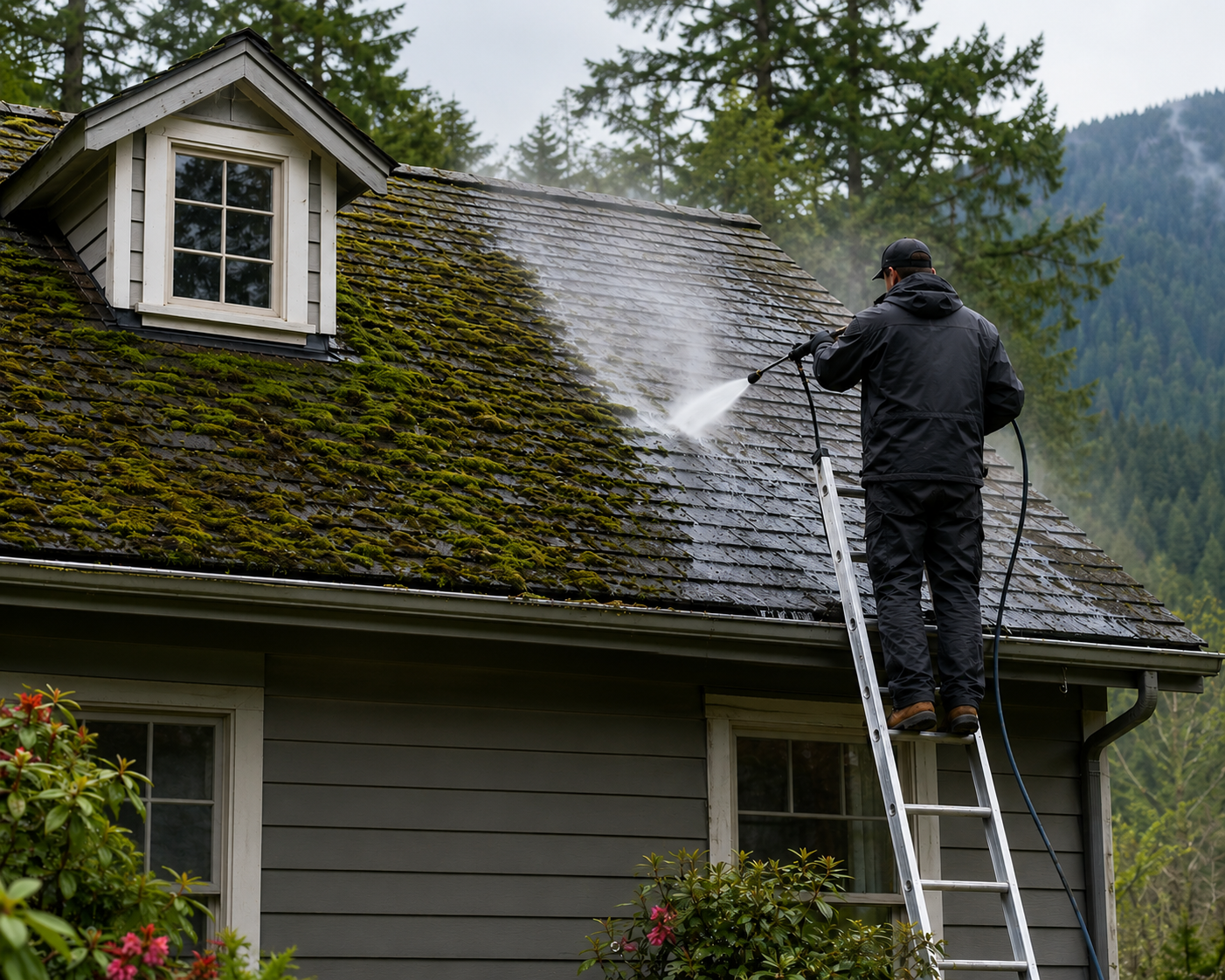
If you live on Central Vancouver Island, chances are you have seen moss growing on a roof somewhere in your neighbourhood. Maybe it is on your own home. Maybe it is on a shaded section that never seems to dry out. Maybe it is along the north-facing slope, in the roof valleys, or creeping along the edges of your shingles.
For homeowners in Nanaimo, Parksville, Port Alberni, Duncan, Courtenay, Nanoose Bay, and surrounding communities, moss is one of the most common roofing problems of the year. The damp coastal climate, tree-covered properties, and shaded roof areas create the perfect environment for moss to thrive.
But here is what many homeowners do not realize: when you remove moss matters almost as much as how you remove it. Timing affects how well the treatment works, how safely the work can be done, and how long the results last.
May is widely considered the best month of the year to remove moss from your Vancouver Island roof. By this point in the season, winter moisture has slowed, summer heat has not yet arrived, and moss is at its most visible and vulnerable. It is the sweet spot where conditions favour the homeowner, the roof, and the moss removal process itself.
This guide explains why May is the ideal time to deal with moss, what moss can do to your roof if ignored, how professional moss removal works, and why Vancouver Island homeowners should take action now rather than wait.
What Moss Actually Does to a Roof
Before exploring why May is the best month to remove moss, it helps to understand why moss is such a serious problem in the first place.
Moss is not just a cosmetic issue. It is a living organism that holds moisture against your roofing materials. On Vancouver Island, where rain and damp conditions are common, that trapped moisture can cause real damage over time.
Moss can damage your roof in several ways
Moss holds water against shingles long after rain has stopped. This extended moisture exposure can weaken the shingle surface, soften the underlying materials, and accelerate wear.
Moss can also lift shingle edges as it grows. When moss spreads beneath the shingle layer, it can push the shingles upward, creating gaps where water, wind, and debris can enter.
In roof valleys, moss can block proper drainage. Water that should flow toward the gutters may slow down, pool, or move sideways under the shingles. This increases the risk of leaks.
Moss can also clog gutters and downspouts. As moss breaks apart, it falls into gutters along with shingle granules, dirt, and other debris. Over time, this can create drainage problems that affect the entire roof system.
Long-term moss damage can include
Lifted and curling shingles, granule loss, wood rot in the roof deck, damaged fascia and soffits, blocked gutters and downspouts, hidden leaks, mould growth in attic insulation, premature roof deterioration, and reduced roof lifespan.
For Vancouver Island homeowners, ignoring moss is one of the most common ways a healthy roof slowly becomes a damaged one. The good news is that moss can be managed effectively, and May is the best time to do it.
Why May Is the Ideal Month for Moss Removal
There are twelve months in the year, and homeowners can technically address moss at any time. But May offers a combination of weather, visibility, safety, and effectiveness that other months simply do not match.
Here is why May stands out as the best month to remove moss from your Vancouver Island roof.
1. Moss Is Fully Visible After Winter Growth
Moss grows most aggressively during the wet, cool months of winter and early spring. By the time May arrives, moss has reached its peak visibility for the year.
This is important because it allows homeowners and professional roofers to clearly see where moss is growing, how widespread it has become, and which areas of the roof are most affected.
Trying to remove moss in late summer or fall, after it has dried out or partially died back, can mean missing patches that will simply return when the rain comes back.
In May, moss is bright green, dense, and easy to identify. That makes treatment more accurate and more thorough.
2. The Roof Has Time to Dry Between Rains
May weather on Vancouver Island is typically a mix of rainy and dry days. The heavy, persistent rain of winter has eased, but the air is still moist enough to keep moss visible and reactive to treatment.
This balance is important. Moss removal often involves brushing, gentle scraping, and applying treatment solutions. These methods work best when the roof can dry between sessions but the moss is still active enough to respond.
Trying to remove moss during peak winter rain can be unsafe and ineffective. Trying to remove it during the hottest, driest part of summer can also be problematic because dry moss becomes brittle and harder to treat at the root level.
May offers the right moisture conditions for effective, lasting moss removal.
3. Safer Working Conditions on the Roof
Roof work is always safer when conditions are right. May tends to offer the safest balance of dry surfaces, mild temperatures, and predictable weather.
Winter roofs are often wet, mossy, and slippery. Summer roofs can become extremely hot, especially in the afternoon, making them uncomfortable and even dangerous to walk on for extended periods.
May provides a window where roof surfaces are typically drier than winter, cooler than summer, and easier to work on safely. This is important for both homeowners doing ground-level inspections and professional roofers doing hands-on moss removal.
Safer conditions also mean better workmanship. When roofers can move carefully and confidently across the roof, they can do a more thorough job without rushing or compromising safety.
4. Moss Removal Prevents Summer Roof Damage
Summer heat does not just affect homeowners. It also affects roofing materials, especially when moss is still present.
When moss is left on a roof through summer, several things can happen.
The moss continues to hold moisture against the shingles, even on hot days. This can weaken the shingle surface over time. As shingles heat up and cool down through the summer cycle, the trapped moisture beneath moss patches can accelerate wear.
Moss also blocks proper airflow across the roof surface. This can affect how heat moves off the roof and may contribute to attic heat buildup in poorly ventilated homes.
By removing moss in May, you allow the roof to enter summer in its best possible condition. Shingles can dry properly, drainage works as intended, and the roof is better prepared to handle UV exposure and seasonal temperature changes.
5. Better Gutter Performance Heading Into Summer Storms
Vancouver Island summers are not always dry. Sudden rainstorms, wind events, and unexpected downpours can still occur. When they do, your gutters need to be ready.
Moss is one of the biggest contributors to gutter clogs. As it breaks apart and falls from the roof, moss collects in gutters along with leaves, twigs, and shingle granules. Over time, this can block water flow completely.
Removing moss in May helps clear the roof before summer storms arrive. It also reduces the amount of moss debris that ends up in your gutters during the months ahead.
A clean roof and clean gutters work together to protect your home from water damage, foundation moisture, and fascia rot.
6. Treatment Has Time to Work Before Summer
Professional moss removal often includes more than just physical removal. It may also involve applying a moss treatment solution that helps kill remaining spores and slows future growth.
These treatments work best when they have time to settle into the roof surface and dry under mild conditions. May provides that ideal window.
If moss treatment is applied during heavy winter rain, it may wash away before it can fully work. If applied during extreme summer heat, it may dry too quickly to penetrate effectively.
May offers the right balance of moisture and warmth for moss treatments to do their job. By the time summer arrives, the treatment has had time to take effect, and the roof is better protected for the months ahead.
7. Easier to Schedule a Professional Roofer
Roofing companies tend to be busiest during the peak summer months when homeowners suddenly notice problems or rush to complete repairs before fall.
May is often a more manageable scheduling window. Homeowners who book moss removal in May are more likely to get the appointment time they want, avoid long wait times, and receive focused attention from their roofer.
This is especially helpful on Vancouver Island, where local roofing companies serve a wide region and may have limited availability during the busiest months.
Scheduling moss removal in May means getting ahead of the rush, securing a convenient appointment, and giving your roof the care it needs before summer demands take over.
8. Protects Your Roof Investment for the Long Term
Your roof is one of the most important investments in your home. Regular moss removal helps protect that investment by extending the life of your shingles, preserving the roof deck, and reducing the risk of premature replacement.
Moss damage is often gradual. A year of moss growth may not cause major problems. But several years of unchecked moss can shorten the life of a roof significantly.
By making May moss removal part of your annual roof care routine, you give your roof the best chance of reaching its full expected lifespan. This can save thousands of dollars in early replacement costs over time.
For Vancouver Island homeowners, where moss-friendly conditions exist nearly year-round, this kind of preventive care is especially valuable.
Signs Your Roof Needs Moss Removal This May
Not every Vancouver Island roof needs moss removal every year, but many do. If you notice any of the following signs, May is the right time to take action.
Visible green patches on the roof. Moss is usually easiest to spot on north-facing slopes, shaded areas, roof valleys, and sections under tree cover.
Dark streaks or stains. Algae and moss often grow together, creating dark vertical streaks that run down the shingles.
Moss spreading along shingle edges. When moss reaches the edges of shingles, it can lift them and create entry points for water.
Moss in roof valleys. Valleys are critical drainage areas. Moss buildup here can slow water flow and increase leak risk.
Moss in gutters. If you see moss or organic debris in your gutters, it likely came from the roof and signals broader moss activity above.
Shingle granules in downspouts. When moss damages shingles, granules often wash into gutters and out through downspouts.
Damp or shaded roof sections that never seem to dry. These areas are prone to moss growth and should be inspected closely.
A roof that has not been cleaned in several years. Even without obvious moss, older roofs in Vancouver Island climates often benefit from professional cleaning.
If you notice any of these signs, it is worth scheduling a professional inspection to determine the best approach for your specific roof.
Why You Should Not Pressure Wash Moss Off Your Roof
One of the most common mistakes Vancouver Island homeowners make is trying to remove moss with a pressure washer. It might seem like a fast solution, but it can cause serious damage.
Pressure washing can damage your roof in several ways
It can strip protective granules from asphalt shingles. These granules shield the shingles from UV rays and weather exposure. Once removed, the shingles wear out much faster.
It can force water under the shingles. High-pressure water can push moisture into areas it should never reach, including under the shingle layer, around flashing, and into the roof deck.
It can crack or break shingles, especially older or brittle ones. Pressure washing can lift edges, dislodge shingles entirely, or damage roof valleys.
It can damage flashing and sealants. The force of pressurized water can break apart caulking, lift flashing, and compromise the seals around vents, skylights, and chimneys.
It can void roof warranties. Many shingle manufacturers specifically warn against pressure washing. Doing so may void your warranty and leave you responsible for any future damage.
Professional moss removal uses gentler, more effective methods that protect your roof while still getting the job done. This is one of the most important reasons to hire a qualified roofer instead of attempting DIY moss removal.
How Professional Moss Removal Works
If you have never had professional moss removal done before, you may be wondering what the process actually involves. Here is a general overview of what to expect.
Inspection. The roofer begins by inspecting the roof to assess moss coverage, shingle condition, drainage areas, and any other concerns. This helps determine the best approach for your specific roof.
Manual removal. Moss is typically removed using soft brushes, gentle scraping tools, and careful hand techniques. The goal is to remove moss without damaging the shingles beneath.
Debris cleanup. Moss, leaves, twigs, and other organic debris are cleared from roof valleys, gutters, and downspouts. This restores proper drainage and prevents clogs.
Treatment application. A moss treatment solution may be applied to kill remaining spores and slow future growth. The specific product used depends on the roof type and condition.
Final inspection. The roofer reviews the work, checks for any additional concerns, and may recommend follow-up maintenance or repairs.
Professional moss removal is safer, more thorough, and more effective than DIY methods. It also gives homeowners peace of mind knowing the work was done correctly.
How Often Should Vancouver Island Roofs Be Cleaned?
The frequency of moss removal depends on several factors, including roof age, tree cover, shade, sun exposure, and previous treatment history.
As a general guideline, most Vancouver Island roofs benefit from professional moss removal every two to four years. Homes with heavy tree cover, deep shade, or older roofs may need more frequent cleaning.
Annual inspections are also helpful. Even if full moss removal is not needed every year, a professional roofer can spot early growth, clear debris, and recommend treatment before moss becomes a serious problem.
Regular maintenance is almost always more affordable than waiting for moss to cause damage that requires major repairs.
What Happens If You Wait Too Long?
Moss does not disappear on its own. If left untreated, it spreads, thickens, and causes increasing damage over time.
Waiting too long to remove moss can lead to
Lifted and curled shingles, granule loss across large roof sections, hidden leaks that show up inside the home, damaged fascia and soffits from clogged gutters, wood rot in the roof deck, mould growth in attic insulation, premature roof replacement, and significantly higher repair costs.
The longer moss is allowed to grow, the more it costs to address. What might be a straightforward moss removal in May can become a major repair project a year or two later.
Vancouver Island homeowners who stay ahead of moss with regular spring maintenance almost always save money in the long run.
DIY Moss Inspection Tips for Homeowners
While professional moss removal is the safest and most effective approach, homeowners can still do plenty of ground-level inspection on their own.
Walk around your home and look at the roof from multiple angles. Use binoculars or your phone camera zoom for a closer view.
Check shaded areas first. North-facing slopes, sections under trees, and roof valleys are the most likely places to find moss.
Look at the gutters. Moss in the gutters often points to moss on the roof above.
Check downspouts. Granules and organic debris coming out of downspouts can indicate roof wear and moss activity.
Inspect roof edges and overhangs. Look for lifted shingles, dark streaks, and visible green patches.
Check the attic. Look for damp insulation, water stains, or musty smells that may indicate moisture problems linked to moss damage.
Do not climb onto the roof. Roof surfaces can be slippery, especially with moss present. Ground-level inspection is safer and still very informative.
If you spot anything concerning, schedule a professional inspection rather than attempting roof-level work yourself.
Why Local Roofing Knowledge Matters
Vancouver Island roofs face unique conditions. The damp climate, heavy tree cover, coastal moisture, and shaded properties all contribute to moss growth in ways that differ from drier regions.
Local roofing companies understand these conditions. They know which roof areas are most prone to moss, which treatments work best in the local climate, and how to schedule moss removal around seasonal weather patterns.
For homeowners in Nanaimo, Parksville, Port Alberni, Duncan, Courtenay, Nanoose Bay, and surrounding communities, working with a local roofer means getting advice and service tailored to the actual conditions your roof faces.
Generic moss removal advice from other regions may not apply. Vancouver Island roofs need Vancouver Island expertise.
Preparing Your Home for Moss Removal Day
If you have scheduled professional moss removal, there are a few simple steps you can take to prepare.
Clear the area around your home. Move outdoor furniture, planters, vehicles, and anything else that might be in the way.
Close windows and skylights. This prevents debris or water from entering during the cleaning process.
Keep pets inside. The noise and activity of roof work can be unsettling for animals.
Trim overhanging branches if possible. This makes roof access easier and reduces future moss growth.
Let your neighbours know. This is a courtesy that helps avoid surprises, especially in townhouse or close-neighbour situations.
Plan to be home or available by phone. The roofer may need to ask questions, share findings, or recommend additional work.
These small steps help the moss removal process go smoothly and make sure you get the best possible result.
After Moss Removal: Keeping Your Roof Cleaner Longer
Once moss has been removed, there are several things you can do to slow future growth and keep your roof in good condition.
Trim back overhanging branches. This reduces shade and allows the roof to dry more quickly after rain.
Clean your gutters regularly. This prevents organic debris from collecting and feeding new moss growth.
Monitor shaded roof areas. Catch early moss growth before it spreads.
Schedule regular roof inspections. Annual or biannual inspections help catch problems early.
Consider zinc or copper strips. Some roofers install these along the roof ridge to slow moss growth over time.
Address drainage problems quickly. Standing water and poor drainage create conditions where moss thrives.
These preventive steps can extend the time between moss removal treatments and help protect your roof investment.
Final Thoughts: May Is the Right Time to Act
If your Vancouver Island roof has been showing signs of moss, May is the best month of the year to take action. Moss is fully visible after winter growth, weather conditions are ideal for treatment, working conditions are safer for professional roofers, and the roof has time to dry and recover before summer arrives.
Waiting to remove moss only allows the damage to spread. Each season of unchecked growth can lift shingles, block drainage, damage gutters, and shorten the life of your roof. The cost of waiting is almost always higher than the cost of acting now.
For homeowners in Nanaimo, Parksville, Port Alberni, Duncan, Courtenay, Nanoose Bay, and across Central Vancouver Island, May moss removal is one of the smartest seasonal maintenance investments you can make.
A clean roof drains better, lasts longer, and protects your home more effectively. It also looks better, improves curb appeal, and helps preserve property value.
If moss is growing on your Vancouver Island roof, do not wait for the damage to spread. Contact RoofPro this May for professional moss removal, expert roof care, and trusted local service that keeps your home protected for years to come.
FAQs About May Moss Removal on Vancouver Island
Why is May the best month to remove moss from my roof? May offers ideal weather conditions, safer working surfaces, and full moss visibility after winter growth. It also gives moss treatments time to work before summer arrives.
Can I remove moss from my roof myself? Ground-level inspection is fine, but climbing onto a moss-covered roof is dangerous. Professional moss removal is safer, more effective, and protects your shingles from accidental damage.
Is pressure washing safe for moss removal? No. Pressure washing can damage shingles, strip protective granules, force water under roofing materials, and void warranties. Gentler professional methods are far safer.
How often should I have moss removed from my Vancouver Island roof? Most local roofs benefit from professional moss removal every two to four years. Homes with heavy shade or tree cover may need more frequent treatment.
Will moss come back after removal? Without prevention, moss can return over time. Treatments, zinc strips, branch trimming, and regular maintenance can slow regrowth significantly.
Does moss really damage roofs that much? Yes. Moss holds moisture against shingles, lifts edges, blocks drainage, clogs gutters, and can shorten roof lifespan if left untreated.
How long does professional moss removal take? Most residential moss removal jobs take a few hours to a full day, depending on roof size, moss coverage, and treatment needs.
Should I schedule moss removal before or after gutter cleaning? Moss removal usually comes first, since debris from the roof falls into the gutters during cleaning. Many roofers handle both services together.