

Most homeowners think about their roof when something goes wrong. The shingles lift, a leak appears, a storm does visible damage. Attic ventilation doesn’t work that way. When it fails, it fails quietly, and often what gets blamed is something else entirely.
Premature shingle aging. Unexpectedly high cooling bills. Moisture damage to insulation and framing that doesn’t trace back to any obvious leak. These are attic ventilation problems in disguise.
On Vancouver Island, the window between the end of rainy season and the arrival of summer heat is short. By June, attic temperatures in poorly ventilated homes can climb well past what the roofing materials were designed to handle on a sustained basis. Getting ahead of that before it starts is the whole point of this article.
What Attic Ventilation Actually Does
Attic ventilation is a system that moves air through the space between your insulation and the underside of the roof deck. It works by creating a continuous flow: cool air enters through intake vents (typically at the soffits along the eaves) and warm air exits through exhaust vents near the ridge or upper roof.
That airflow does two separate jobs depending on the season.
In winter, it keeps the attic cold. That might sound backwards, but a cold attic prevents the freeze-thaw cycles that cause ice dams along eaves, which are a significant source of roof and ceiling damage in Canadian homes.
In summer, it exhausts heat before it builds up. Without adequate airflow, attic temperatures can reach 60 to 70 degrees Celsius on a warm Vancouver Island afternoon. That sustained heat degrades asphalt shingles from the underside, accelerating their aging by years. It also radiates down into living spaces, making the house harder and more expensive to cool.
Good ventilation doesn’t eliminate heat entirely. It keeps the attic close to the outdoor ambient temperature rather than letting it become an oven.
What Improper Attic Ventilation Can Cause
This is the section most homeowners wish they’d read before spending money on the wrong repairs.
Shortened Shingle Lifespan
Asphalt shingles are rated for a certain number of years under normal conditions. Sustained attic heat in summer is not normal conditions. Shingles on a poorly ventilated roof can age 25 to 40 percent faster than on a comparable well-ventilated roof. A 25-year shingle becomes a 15 to 18-year shingle. That difference shows up as a roof replacement bill that arrives earlier than it should.
Moisture Damage in Winter
Warm, humid air from the living space below rises into the attic. If ventilation is inadequate, that moisture condenses on cold roof sheathing during winter. Over time, this causes rot, mould, and compromised structural integrity in the framing. It’s one of the most expensive outcomes of ventilation failure because it often isn’t discovered until it’s already significant.
Ice Dams
When attic heat escapes unevenly through the roof deck in winter, it melts snow from the top down. That meltwater runs to the cold eaves and refreezes, forming ice dams that back water under shingles and into the home. Vancouver Island winters are mild enough that true ice dams are less common than in colder inland regions, but they do occur, and attic heat is almost always a contributing factor when they do.
Higher Cooling Costs
An overheated attic radiates heat into the rooms below it. Air conditioning and fans work against that load all summer. Homeowners with well-ventilated attics consistently report lower cooling costs than those with poor airflow, with some studies estimating reductions of 10 to 15 percent in summer energy use.
Voided Shingle Warranties
Most asphalt shingle manufacturers include ventilation requirements in their warranty terms. If a roof fails prematurely and an inspection finds inadequate ventilation, the warranty claim is typically denied. This is a detail many homeowners discover too late.
How to Tell If Your Attic Is Venting Properly
You don’t need to get on the roof to do a basic check. A few observations from inside and outside the home tell most of the story.
From Inside the Attic:
- On a warm day, open the attic hatch. If the heat is noticeably intense even an hour after the sun has moved off the roof, airflow is insufficient
- Look for moisture staining, dark discolouration, or frost residue on the underside of the roof sheathing, particularly near the eaves and ridge
- Check that soffit vents are not blocked by insulation that has shifted toward the eaves
- Visible mould on rafters or sheathing is a sign that moisture has been accumulating
From Outside:
- Count your soffit vents along the eaves. If you can’t see any, intake ventilation may be insufficient
- Check for a ridge vent along the peak of the roof
- Look at shingles near the ridge for premature cracking or curling
Ventilation Types: Soffit, Ridge, Gable, and Fans
Soffit Vents (Intake)
These allow cool outside air to enter the attic at the lowest point. Without them, exhaust vents cannot function properly.
Ridge Vents (Exhaust)
A continuous ridge vent allows hot air to exit evenly along the roof peak. When paired with soffit vents, it creates a balanced system.
Gable Vents
Found on older homes. Less effective because they do not move air evenly across the attic space.
Attic Ventilation Fans
Powered systems that increase airflow. Best used as a supplement, not a replacement for passive ventilation.
The 1:150 vs 1:300 Ventilation Rule: What It Means for Your Home
Canadian building codes require a minimum vent area based on attic size. The 1:300 ratio means one square foot of vent area per 300 square feet of attic floor, split between intake and exhaust.
The 1:150 ratio applies when ventilation is not balanced between intake and exhaust, requiring more total vent area to compensate.
In practical terms, a 1,500 square foot attic needs about five square feet of vent area under the 1:300 rule.
These are minimum standards. Many homes benefit from exceeding them.
Attic Ventilation and Insulation: They Work Together
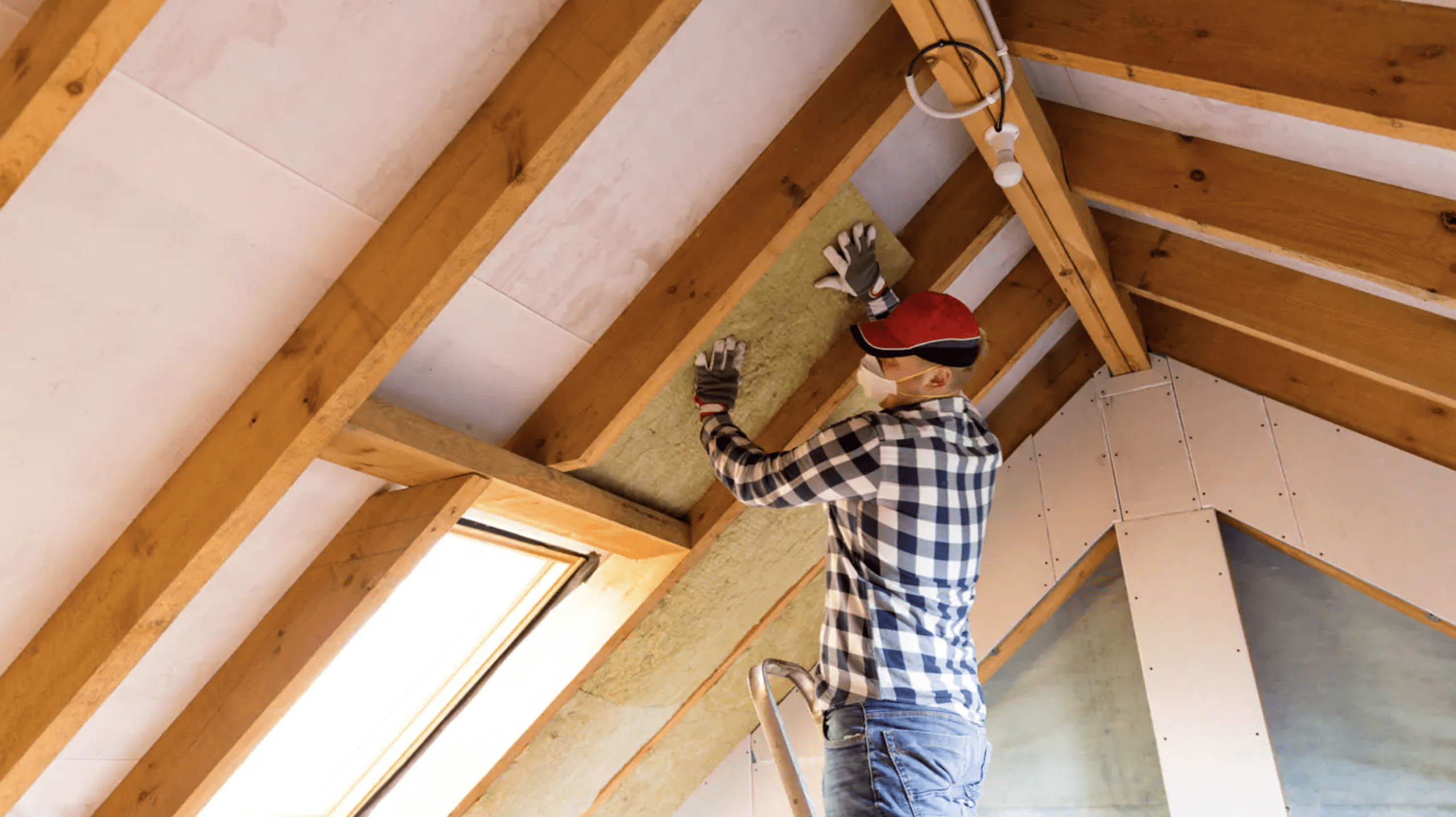
Insulation slows heat transfer between living space and attic. Ventilation manages temperature and moisture within the attic itself. Both must function properly together.
A common issue is insulation blocking soffit vents, cutting off airflow entirely. This makes the ventilation system ineffective regardless of exhaust capacity. Rafter baffles help maintain airflow channels but are often missing in older homes.
Common Questions About Attic Ventilation
Can you have too much attic ventilation?
Rarely. Most homes have too little rather than too much. Imbalance between intake and exhaust is the bigger issue.
Who should I call for attic ventilation work?
A licensed roofer is the best starting point.
How much does improving attic ventilation cost?
It varies depending on scope, from minor soffit improvements to full system upgrades.
My house stays hot upstairs in summer. Is that a ventilation problem?
It could be, especially if attic ventilation is limited.
Do I need attic baffles in every rafter bay?
Ideally yes, especially above soffit vents.
Before June Arrives
Attic ventilation is often overlooked until problems appear. Homeowners who address it early avoid higher costs later, from roof replacement to energy inefficiency.
If your home is more than 15 years old or has never had a ventilation assessment, this is a good time to check.
The Roof Pro provides attic ventilation inspections and upgrades across Central Vancouver Island, including Nanaimo, Parksville, Lantzville, and Qualicum Beach.
Contact us to book a ventilation assessment before the summer heat sets in.
Visit theroofpro.ca to get in touch.