

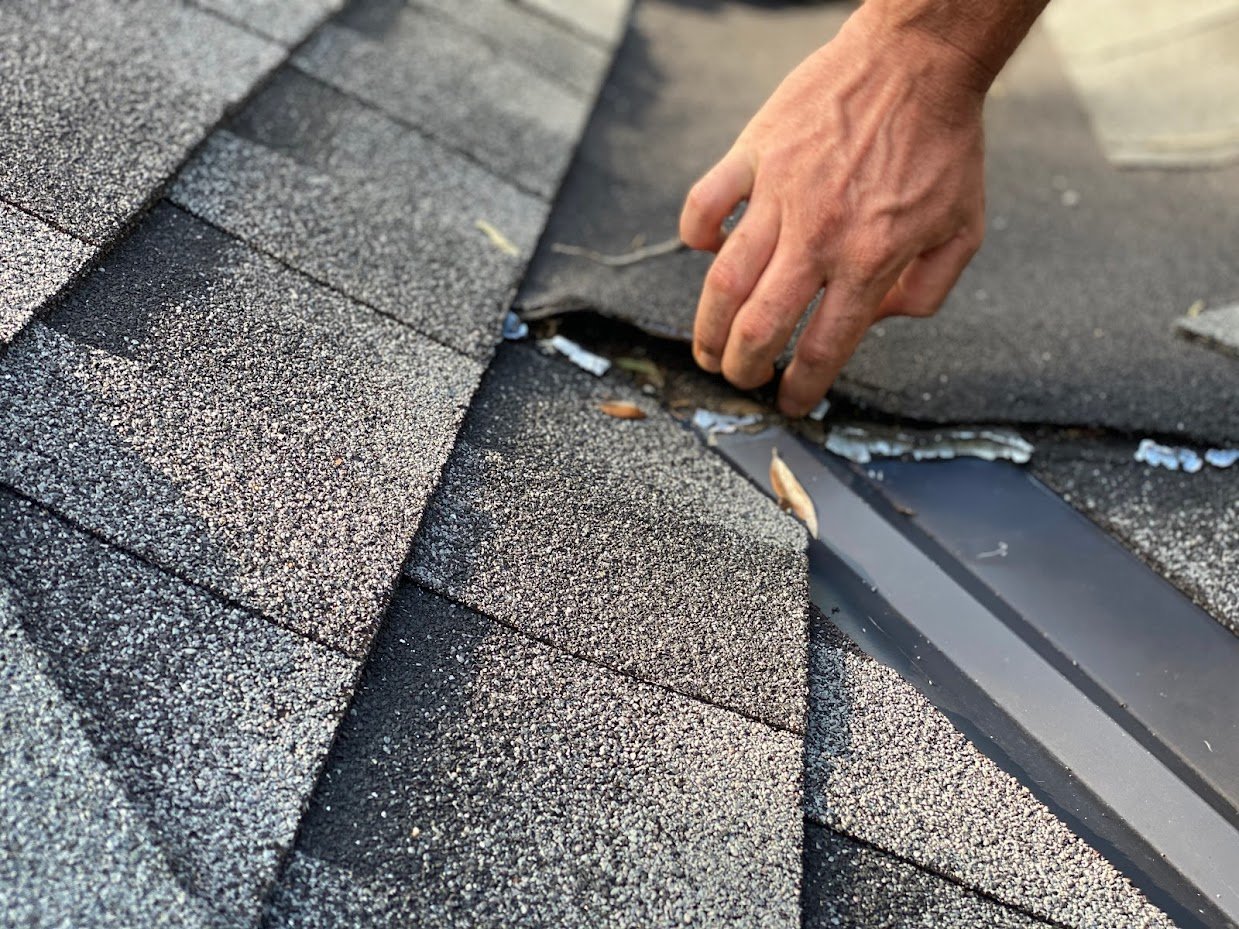
Your roof is one of the most important parts of your home, but it is also one of the easiest to overlook. As long as it is not leaking, most homeowners assume it is doing its job. The truth is that roofs deteriorate gradually, and by the time obvious problems appear, the damage is often more advanced than it looks.
For homeowners in Nanaimo, Parksville, Port Alberni, Duncan, Courtenay, Nanoose Bay, and across Central Vancouver Island, this question becomes especially important after a long wet winter. Months of rain, wind, moss growth, and moisture exposure can accelerate roof wear in ways that are not always visible from the ground. Spring is the time of year when many homeowners begin to wonder whether their roof can be repaired again, or whether it is time to start planning for replacement.
There is no single answer that applies to every home. Roof replacement decisions depend on age, materials, condition, climate exposure, and previous repair history. But there are clear warning signs that point toward replacement rather than another round of patches and quick fixes.
This guide walks through seven of the most important signs your Vancouver Island roof may need replacement this year. If you notice several of these on your own home, it is time to schedule a professional inspection and start planning your next steps.
Why Vancouver Island Roofs Wear Out Faster Than You Might Expect
Before diving into the warning signs, it helps to understand why Vancouver Island roofs face unique pressures.
The local climate is one of the most demanding in Canada when it comes to roofing. Heavy rainfall, damp coastal air, shaded properties, tree cover, moss-friendly conditions, and seasonal wind events all contribute to faster roof wear. A shingle roof that might last 25 to 30 years in a drier climate may show its age sooner in places like Nanaimo or Port Alberni.
This does not mean Vancouver Island roofs are doomed to early replacement. With regular maintenance, moss removal, gutter care, and timely repairs, many roofs reach or exceed their expected lifespan. But it does mean homeowners need to pay closer attention to the warning signs and plan replacement before small problems become major ones.
Catching the right moment for replacement is important. Replace too early, and you spend money on a roof that still had life left in it. Wait too long, and you risk water damage, structural problems, mould, and far higher repair costs.
The seven signs below help you recognize when your roof is genuinely at the end of its useful life.
Sign 1: Your Roof Is Approaching or Past Its Expected Lifespan
Age is one of the most reliable indicators of whether a roof needs replacement. Every roofing material has an expected lifespan, and once a roof approaches that age, the risk of failure increases significantly.
Typical lifespans for common Vancouver Island roofing materials
Asphalt shingles generally last 20 to 30 years, though Vancouver Island conditions can shorten this. Cedar shake roofs typically last 25 to 40 years, depending on maintenance and exposure. Metal roofs can last 40 to 70 years with proper care. Flat or low-slope membrane roofs often last 15 to 25 years.
If your roof is approaching the upper end of its expected lifespan, it is worth scheduling a professional inspection to assess its real condition. Some roofs continue performing well past their expected age, while others fail earlier due to climate exposure or installation issues.
Why age matters more than appearance
A roof can look fine from the ground while still being structurally near the end of its life. The underlayment may be deteriorating, the seals may be failing, and the materials may be losing their ability to shed water effectively.
If you do not know how old your roof is, check your home purchase documents, ask the previous owner, or look for permits filed with the municipality. A professional roofer can also estimate the age based on visible wear and material condition.
Once a roof is past its prime, repairs become less effective and replacement becomes the more cost-efficient choice over time.
Sign 2: Curling, Cracked, or Missing Shingles Across Large Areas
Damaged shingles are one of the most visible signs of roof wear. A few isolated issues may only need repair, but widespread damage usually points to replacement.
Common shingle problems that signal replacement
Curling shingles occur when the edges lift away from the roof surface. This can be caused by age, heat exposure, moisture damage, or poor ventilation. Once shingles begin curling across large sections of the roof, they can no longer seal properly against wind and rain.
Cracked shingles often appear as the asphalt layer becomes brittle with age. UV exposure, temperature changes, and weather cycles all contribute. Cracks allow water to reach the underlayment and roof deck.
Missing shingles are a serious concern. Each missing shingle creates an open path for water to enter the roof system. A few missing shingles may be repairable, but recurring losses or large bare patches suggest the roof is no longer holding together as it should.
Bald spots from granule loss are another warning sign. Shingle granules protect the asphalt layer from UV rays and weather. Once they are gone, the shingle deteriorates quickly. Bald patches across the roof indicate the shingles are reaching the end of their life.
When to consider replacement instead of repair
If shingle damage is limited to one section of the roof, repair may be enough. But when damage is spread across multiple slopes, when the same areas keep losing shingles after repairs, or when the entire roof shows uniform wear, replacement is usually the better investment.
Patching an aging roof can feel like an endless cycle. New repairs may not match the surrounding shingles, and the rest of the roof continues to age around the patched areas. At some point, replacement becomes more practical than repeated repair.
Sign 3: Significant Granule Loss Showing Up in Gutters and Downspouts
If you have been cleaning your gutters and noticing what looks like coarse black sand, you are seeing shingle granules. A small amount of granule loss is normal, especially on newer roofs as loose granules settle. But heavy or persistent granule loss is a serious warning sign.
Why granules matter
Shingle granules serve several important functions. They protect the asphalt layer from UV rays, help shed water, add fire resistance, and give shingles their colour. Without granules, shingles deteriorate rapidly.
Signs of significant granule loss
You may notice large amounts of granules in your gutters, especially after heavy rain. Granules may collect at the base of downspouts or along the ground near the foundation. The roof itself may show bald or shiny spots where granules are missing. Dark patches on the roof can indicate exposed asphalt.
What this means for replacement
Once a roof begins shedding granules in significant amounts, it has typically entered the final stage of its useful life. Without the protective granule layer, the underlying shingle material breaks down quickly. UV damage accelerates, water resistance drops, and leaks become more likely.
Heavy granule loss is one of the clearest signs that replacement is approaching. A professional inspection can confirm how much life remains and help you plan accordingly.
Sign 4: Persistent Leaks, Ceiling Stains, or Attic Moisture
A single leak does not mean your roof needs replacement. Many leaks can be repaired effectively, especially when caught early. But persistent leaks, repeated stains, or widespread attic moisture often point to deeper problems that repair alone cannot solve.
Warning signs to watch for
Ceiling stains that keep returning after repairs. Multiple leak points across different parts of the roof. Damp insulation in the attic. Mould or mildew growth in upper corners. Musty smells in upstairs rooms. Water marks around skylights, chimneys, and vents. Dark streaks on attic decking. Rusted nail tips visible from below.
Why repeated leaks signal replacement
When leaks keep coming back despite repairs, the underlying roof system may be failing. The underlayment may be deteriorating, the flashing may be widely compromised, or the shingles may no longer provide a reliable water barrier.
Repair work on an aging roof can also create a cycle of chasing leaks. Fixing one area may simply reveal weakness in another. Over time, the cost of repeated repairs can approach or exceed the cost of replacement.
Attic conditions tell the real story
Your attic often shows roof problems before your living space does. If you see widespread moisture, dark staining on the roof decking, or visible daylight through gaps, your roof system is failing in more than one place. These are strong indicators that replacement should be on the table.
A professional inspection can map out the full extent of the damage and help you decide between continued repairs and a complete replacement.
Sign 5: Sagging Roof Sections or Visible Structural Issues
A roof should appear straight and even when viewed from the ground. If you notice any sagging, dipping, or wave-like areas, that is a serious warning sign.
Common signs of structural concerns
Visible sagging along the ridge line. Dips or low spots in the middle of roof slopes. Uneven shingle lines that look wavy. Soft or spongy areas when professionals walk on the roof. Cracks in the soffit or fascia. Doors or windows that suddenly stick on the top floor.
Why sagging is so serious
Sagging usually indicates that the roof deck or supporting structure has been compromised. This can result from long-term water damage, rotting wood, undersized framing, or excessive weight from moisture-soaked materials.
Once structural damage sets in, simple shingle repair will not solve the problem. The underlying decking and possibly framing may need to be replaced as part of a full roof replacement.
The risks of ignoring sagging
A sagging roof can worsen over time. Continued moisture exposure can spread the damage, and in extreme cases, sections of the roof can collapse. This is rare, but the risk is real for roofs that have been neglected for years.
If you see any sign of sagging, schedule a professional inspection immediately. This is not a problem that should wait. In most cases, sagging is a clear signal that replacement is needed, not just repair.
Sign 6: Heavy Moss, Algae, or Persistent Roof Cleaning Issues
Moss is a fact of life for many Vancouver Island roofs. The damp climate, tree cover, and shaded properties create ideal growing conditions. Regular moss removal is part of normal roof maintenance, but when moss keeps coming back aggressively despite cleaning, it can signal deeper problems.
Warning signs related to moss and roof condition
Heavy moss returning quickly after professional cleaning. Moss damage that has lifted shingles permanently. Dark streaks and algae growth across large sections. Visible deterioration beneath moss patches. Repeated need for major cleaning every year or two. Moss spreading into roof valleys and around penetrations.
Why this matters for replacement
Healthy roofs can usually be cleaned and treated effectively, with results that last several years. When moss keeps returning aggressively, the roof surface itself may be deteriorating. Damaged shingles, lost granules, and weakened materials create conditions where moss thrives, even after professional removal.
If moss removal is becoming an annual battle, the roof may be telling you that replacement is approaching. New roofing materials with proper installation, ventilation, and moss-resistant features can dramatically reduce future maintenance needs.
Vancouver Island context
Local roofers see this pattern regularly. A roof that needed moss treatment every five years for two decades may suddenly need treatment every year as it ages. This is often the first sign that replacement is becoming the better long-term investment.
A professional inspection can determine whether your roof can be cleaned and protected for several more years, or whether replacement is the more practical choice.
Sign 7: Rising Repair Costs and Frequent Roof Service Calls
Sometimes the best indicator of whether to replace a roof is the trend in your repair history. If you have been calling roofers more often, paying for repeated repairs, and watching costs climb, it may be time to step back and consider the bigger picture.
Signs that repair costs are signalling replacement
Multiple repairs in the past few years. Each repair costing more than the last. New problems appearing shortly after previous repairs. Different roofers all recommending replacement. Insurance concerns or claim difficulties. Difficulty finding replacement shingles that match the existing roof.
The math of repair versus replacement
There is a point where ongoing repairs no longer make financial sense. If you are spending several thousand dollars every year or two on repairs to a roof that is already near the end of its life, that money would often be better invested in replacement.
A new roof provides a fresh start. It eliminates the underlying problems causing repeated repairs, offers warranty protection, improves home value, and ends the cycle of patch-and-fix.
Looking at the long term
Replacement is a larger upfront cost, but it usually pays off over time through reduced maintenance, fewer emergencies, better energy efficiency, improved curb appeal, and stronger home value. For Vancouver Island homeowners, a new roof also offers better protection against the local climate.
If you are unsure whether you have crossed the threshold from repair to replacement, a professional inspection and honest cost analysis can help you decide.
How to Confirm Whether You Need a New Roof
Recognizing one or more of these signs is the first step. The next step is getting a professional assessment to confirm what your roof actually needs.
What a professional roof inspection includes
A qualified roofer will examine shingle condition, flashing integrity, gutter performance, attic moisture and ventilation, roof valley condition, fascia and soffit health, structural soundness, and signs of past or active leaks. They will also consider roof age, repair history, and any specific concerns you have raised.
Questions to ask during an inspection
How much life does my roof likely have left? Which problems can be repaired effectively? Which problems point toward replacement? What would replacement cost? What materials would you recommend for my home and climate? Are there any urgent safety concerns?
Getting a second opinion
For major decisions like roof replacement, it is reasonable to get more than one assessment. Different roofers may have different perspectives on timing, materials, and approach. Compare their findings, ask questions, and choose the company you trust most.
A good local roofer should explain their reasoning clearly, show you photos or evidence of problems, and help you understand your options without pressure.
Planning a Roof Replacement: What Homeowners Should Know
If your inspection confirms that replacement is needed, planning ahead makes the process smoother and less stressful.
Choosing the right materials
Asphalt shingles remain the most common choice on Vancouver Island. They offer good value, reasonable lifespan, and broad style options. Metal roofing is increasingly popular for its longevity and weather resistance. Cedar shake roofs are still used on some homes, though maintenance requirements are higher. Flat or low-slope sections may use membrane roofing systems.
The right choice depends on your home, budget, aesthetic preferences, and long-term plans.
Timing your replacement
Spring and early summer are popular times for roof replacement on Vancouver Island. Weather conditions are typically favourable, and scheduling tends to be easier than during the rushed late-summer and fall seasons.
If your roof can wait until the optimal season, planning ahead helps you secure the contractor you want and avoid emergency replacement under pressure.
Budgeting for replacement
Roof replacement is a significant investment, but it is also one of the most valuable home improvements you can make. Get detailed quotes that include materials, labour, removal of old roofing, disposal, and any necessary structural repairs. Make sure warranties are clearly explained.
Working with a local roofing company
Local roofers understand Vancouver Island conditions, including coastal moisture, moss growth, wind patterns, and material performance in the local climate. Choosing a trusted local company helps ensure your new roof is built for the conditions it will actually face.
When Repair Is Still the Better Choice
Not every aging roof needs immediate replacement. In many cases, targeted repairs can extend the life of a roof for several more years.
Repair may be the right choice when
Damage is limited to a specific area. The roof is well within its expected lifespan. Most shingles are still in good condition. There are no signs of structural problems. The attic shows no widespread moisture issues. Repair costs are reasonable compared to the remaining roof life.
A professional roofer can help you weigh the options honestly. The goal is to make the decision that protects your home and gives you the best value over time, not to push replacement when repair will do.
The Cost of Waiting Too Long
One of the biggest mistakes Vancouver Island homeowners make is waiting too long to replace a failing roof. The longer you wait, the more damage can accumulate, and the more expensive the overall project can become.
Risks of delaying replacement
Water damage to insulation, drywall, and framing. Mould growth in walls and ceilings. Damaged electrical systems. Reduced home value. Increased emergency repair costs. Difficulty selling the home. Insurance complications. Foundation moisture from drainage problems.
A failing roof rarely improves on its own. Acting on the warning signs early helps you control timing, costs, and outcomes. Waiting until the roof fails completely can mean rushed decisions, higher costs, and additional repairs beyond the roof itself.
Why Local Vancouver Island Expertise Matters
Roof replacement is not just about installing new shingles. It is about choosing the right materials, methods, and design for your specific home and climate.
Vancouver Island homes face conditions that many other regions do not. Heavy rain, coastal moisture, tree cover, moss-friendly environments, and seasonal wind all influence how a roof should be built and maintained.
Local roofers bring valuable experience with these conditions. They know which materials perform best, how to design proper drainage and ventilation, where to expect moss and debris problems, and how to plan for long-term durability in the local climate.
For homeowners in Nanaimo, Parksville, Port Alberni, Duncan, Courtenay, Nanoose Bay, and surrounding areas, working with a local roofing company is one of the most important decisions in the replacement process.
Final Thoughts: Recognize the Signs, Plan Ahead, Protect Your Home
Your roof works hard every day to protect your home from the elements. Eventually, every roof reaches the end of its useful life, and recognizing that moment early is one of the most important things a homeowner can do.
If you notice curling shingles, persistent leaks, heavy granule loss, sagging sections, aggressive moss return, repeated repairs, or a roof approaching the end of its expected lifespan, do not ignore the signs. These are your roof telling you that replacement should be on the table.
The earlier you act, the more options you have. You can plan timing, compare materials, choose your contractor, and budget without pressure. Waiting until your roof fails completely takes those choices away and often leads to higher costs and more stress.
For Vancouver Island homeowners, spring is the ideal time to assess roof condition. Winter is behind you, summer is ahead, and a clear-eyed look at your roof now can save thousands of dollars and years of frustration later.
If your Vancouver Island roof is showing one or more of these warning signs, contact RoofPro for a professional inspection, honest assessment, and trusted local guidance on whether repair or replacement is the right choice for your home.
FAQs About Roof Replacement on Vancouver Island
How long does a typical Vancouver Island roof last? Asphalt shingle roofs commonly last 20 to 30 years, though local climate factors can shorten this. Metal roofs can last 40 to 70 years. Cedar shake roofs typically last 25 to 40 years with proper maintenance.
Can I just keep repairing my roof instead of replacing it? For a while, yes. But once repair costs add up, leaks become persistent, or the roof passes its expected lifespan, replacement usually becomes the better long-term value.
How do I know if my roof is old enough to replace? Check home purchase records, ask previous owners, or look for municipal permit records. A professional inspection can also estimate roof age based on condition.
Is moss a sign I need a new roof? Not always. Most moss problems can be resolved with professional cleaning. However, when moss keeps returning aggressively despite treatment, it can signal that the roof is deteriorating.
What is the best time of year to replace a roof on Vancouver Island? Spring and early summer are typically ideal. Weather conditions are favourable, and scheduling is easier than during the busy late-summer rush.
How much does roof replacement cost? Costs vary widely based on size, materials, complexity, and contractor. Get detailed local quotes for accurate pricing. Investing in quality materials and skilled installation pays off over time.
Should I get more than one quote? Yes. For major projects like roof replacement, getting two or three quotes helps you compare approaches, materials, warranties, and pricing.
Will a new roof improve my home value? Yes. A new roof improves curb appeal, reassures buyers, reduces maintenance concerns, and often pays back a significant portion of its cost in home value.