

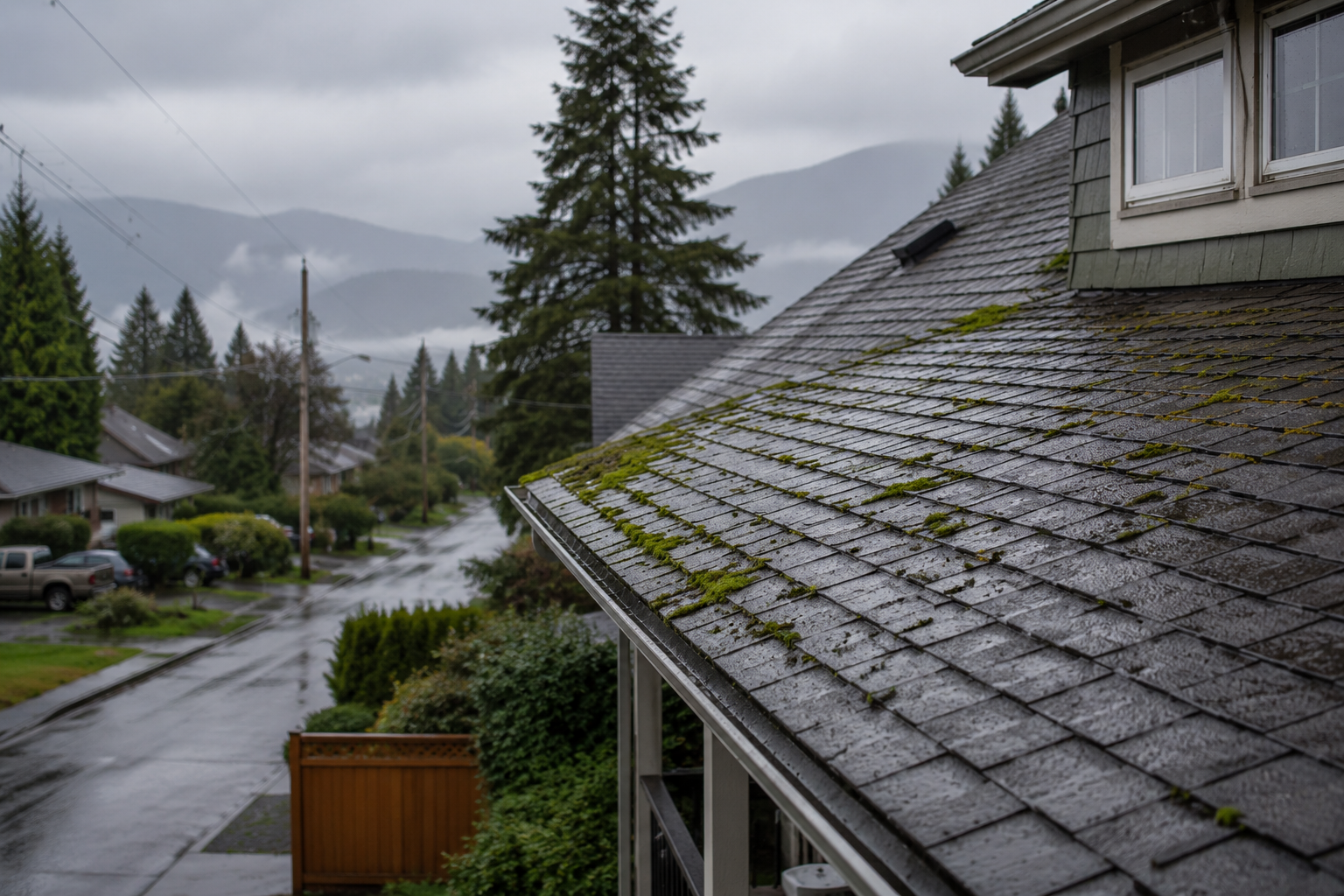
If you own a home on Vancouver Island, your roof works harder than most. The same coastal setting that gives us mild winters and green summers also throws a steady mix of rain, salt air, and damp shade at your roof, year after year. A roof that might last 25 years in a dry inland climate can wear out noticeably faster here if it is left alone.
The good news is that none of this is a mystery, and almost all of it is manageable. Once you understand what the coast is actually doing to your roofing materials, you can make a few small choices that add real years to the roof over your head. Here is how it works and what we would tell any neighbour who asked.
Why the coast is tougher on roofs than people expect
Most roofing products are tested and rated in fairly average conditions. The Island is not average. We sit in a marine climate, which means high humidity for a large part of the year, frequent rain rather than occasional storms, and air that carries fine salt particles inland from the ocean. Each of those factors chips away at a roof in its own way, and together they add up faster than homeowners tend to assume.
The result is that two identical roofs, one installed here and one installed in the dry interior, can age very differently. The materials are the same. The climate is not.
Rain and moisture: the slow, constant pressure
Rain is the obvious one, but it is not the heavy downpours that do the most damage. It is the sheer frequency. A roof here is wet far more often than it is dry, and that constant moisture keeps every seam, fastener, and flashing point under pressure.
Water finds weak spots. A nail that has backed out slightly, a cracked sealant line around a vent, a lifted shingle edge—any of these become an entry point when the roof rarely gets a chance to fully dry. Once moisture works its way under the surface, it can reach the underlayment and the wood beneath, and that is where small problems turn into expensive ones.
Pooling is another issue on lower-slope sections. Where water sits instead of running off, it works on the material continuously. Flat porch roofs and low-pitch additions are common trouble spots on Island homes for exactly this reason.
Moss and algae: the Island’s signature roof problem
Drive through almost any neighbourhood here and you will see it: green moss creeping across the shaded, north-facing slopes of roofs. It looks harmless, even a little charming. It is not.
Moss holds water against the roof surface like a sponge. On an asphalt shingle roof, it lifts and separates the shingles as it grows under and between them, which breaks the water seal they depend on. On any roof, it traps moisture exactly where you least want it. Left long enough, a thick moss layer can shorten a shingle roof’s life by years and lead to leaks well before the material would otherwise fail.
Our damp, shaded conditions are close to ideal for moss and algae growth. That is why moss control is not an optional extra on the Island. It is part of basic roof care and seasonal maintenance.
Salt air: the quiet one
Salt air is the factor people forget. The closer your home is to the water, the more salt is carried onto your roof and held there by the humidity. Salt is corrosive, and it goes after the metal parts of your roof first: flashing, fasteners, gutters, vents, and any exposed metal edges.
When flashing corrodes, the seals around chimneys, skylights, and roof joints start to fail, and those are the spots where leaks most often begin. Homes within sight of the ocean should expect their metal roofing components to weather faster than inland homes, and should plan inspections accordingly.
Wind and falling debris
Island weather brings its share of wind, especially through the fall and winter storm season. Strong gusts can lift and loosen shingles, particularly along edges and ridges that have already been weakened by age or moisture. Once a shingle lifts, the ones around it become vulnerable too.
Then there are the trees. The same beautiful tree cover that makes Island properties so appealing also drops needles, leaves, and branches onto roofs and into gutters. Debris that sits on a roof holds moisture and feeds moss. Debris in a gutter blocks drainage and sends water backing up under the roof edge. Overhanging branches can scrape and gouge the surface in the wind.
What different roofing materials can expect here
Not every roof ages the same way in this climate. A few general patterns hold true on the Island:
- Asphalt shingles are the most common choice and the most affected by moss and constant moisture. Without upkeep, they tend to reach the lower end of their rated lifespan here.
- Metal roofing sheds water well and resists moss, but it depends heavily on its coatings and fasteners holding up against salt air, so coastal homes need to watch for corrosion at the edges and seams. (You can read more about how these two popular options stack up in our metal vs asphalt comparison article).
- Cedar and wood roofing can look beautiful but struggles in a damp marine climate, where rot and moss are persistent threats without diligent maintenance.
Whatever is over your head right now, the maintenance habits below will help it reach the upper end of its realistic lifespan rather than the lower end.
What you can actually do about it
Here is the part that matters. You cannot change the climate, but you can change how your roof handles it. These are the steps that make the biggest difference on Island homes.
Keep moss under control
Do not let moss establish itself. Regular gentle removal and, where appropriate, zinc or copper treatments along the ridge can slow regrowth dramatically. Avoid pressure washing, which can strip the protective granules off shingles and do more harm than the moss. This is a job worth handing to someone who knows roofs, because the wrong technique shortens roof life instead of extending it.
Clean your gutters and clear debris
Keep gutters flowing and keep the roof surface clear of accumulated needles and leaves, especially after the fall. Good drainage is one of the cheapest, most effective things you can do to protect a roof in this climate. Trim back overhanging branches so they are not scraping the surface or dropping a constant supply of debris.
Inspect after the storm season
Have your roof looked at on a regular schedule, and especially after a hard winter. A trained eye catches lifted shingles, corroded flashing, failed sealant, and early moss before any of them turn into a leak. Catching a problem in spring is a small repair. Discovering it as a ceiling stain in December is not. You can easily book a professional evaluation through The Roof Pro roof inspection page.
Deal with small problems immediately
In a climate this wet, a minor issue does not wait politely. A single lifted shingle or a hairline crack in flashing gives water an opening, and water never stops trying. Fixing the small thing now is almost always far cheaper than repairing the damage it would cause if ignored.
When maintenance is not enough
Every roof reaches a point where upkeep can no longer hold back the years. If yours is approaching the end of its expected life, showing widespread granule loss, curling, or repeated leaks, repairs start to become a losing battle. At that stage, planning a replacement on your own timeline is far better than being forced into one by a winter failure.
A good roofer will tell you honestly which stage your roof is in. Sometimes the answer is a simple clean and a few small fixes that buy you several more good years. Sometimes it is time to start thinking ahead. Either way, you deserve a straight answer.
Frequently asked questions
How long should a roof last on Vancouver Island?
It depends on the material and the maintenance, but expect coastal conditions to push roofs toward the lower end of their rated range without upkeep. A well-maintained asphalt shingle roof can still give you solid service, while a neglected one in a damp, shaded spot may need attention years sooner.
Is moss really that bad for my roof?
Yes. It holds moisture against the surface, lifts shingles, and breaks the water seal they rely on. On the Island, moss control is one of the most important things you can do to protect a roof.
Does living near the ocean really matter for my roof?
It does. Salt air corrodes metal flashing, fasteners, and gutters faster, and those are exactly the components that keep water out at the vulnerable joints. Homes near the water should expect more frequent inspections of their metal roofing parts.
How often should I have my roof inspected?
A yearly check is a good baseline here, with an extra look after a rough winter storm season. Regular inspection is the single most reliable way to catch small issues before they become leaks.
The bottom line
Vancouver Island’s coastal climate is hard on roofs, but it is predictable, and predictable problems are manageable problems. Stay ahead of moss, keep your drainage clear, watch your flashing for salt corrosion, and have a professional check things on a schedule. Do that, and your roof will give you the full life you paid for, rain and all.
If you are not sure what condition your roof is in, the team at The Roof Pro is local, knows exactly what this climate does, and is always happy to take a look and give you an honest assessment. Reach out whenever you would like a hand.