

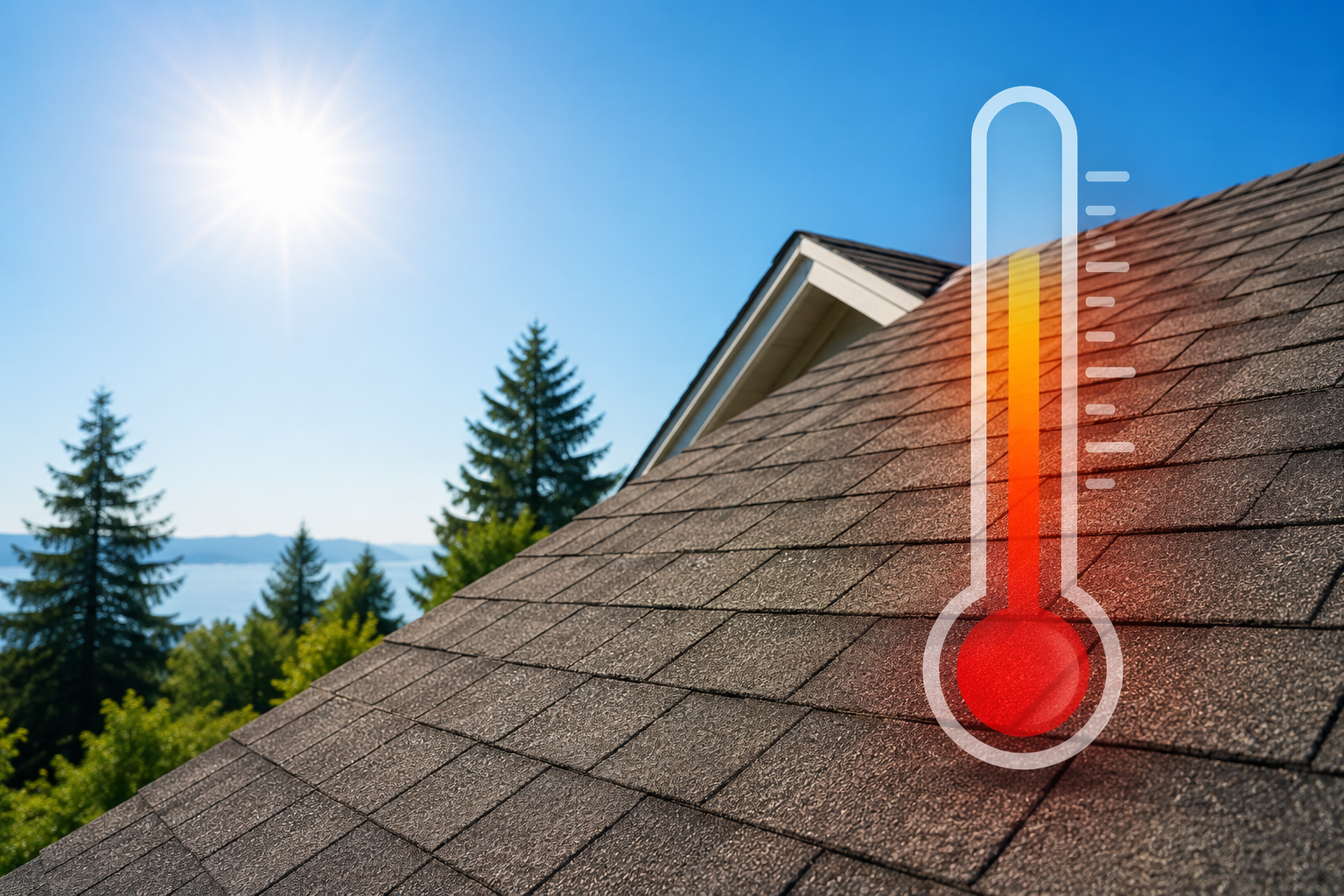
Every few summers, the forecast on the Island stops looking like a normal July week and starts looking like something else. A ridge of high pressure parks over the coast, the daytime highs jump ten degrees past what we are used to, and it holds for several days straight. We have all lived through at least one of these now.
Most people plan for a heat wave by thinking about themselves. Fans, water, staying out of the sun in the afternoon. Fair enough. But a sustained heat event does real, measurable things to your roof and attic too, and a few minutes of checking before it arrives can save you a rough week and, in some cases, an expensive one.
Why a Heat Wave Is Different From a Normal Hot Day
A single 28-degree afternoon does not stress a roof much. The shingles heat up, the attic warms, and everything cools back down overnight. The problem starts when that overnight cooldown does not really happen, night after night, because a heat wave often comes with warm overnight lows too.
Without that nightly reset, heat builds up in the attic day over day. By day three or four of a heat event, an attic that started at a normal summer temperature can be running significantly hotter than it would on an isolated hot day, and it stays that way well into the evening. That sustained heat is what actually does the damage, not the peak temperature on any single afternoon.
What Sustained Heat Does to the Roof Itself
Asphalt shingles are petroleum based, and heat slowly cooks the oils out of them that keep them flexible. One hot week will not ruin a roof on its own, but repeated heat waves add up over the years, and they are part of why roofs in hot, poorly ventilated attics tend to reach the end of their life earlier than the ones next door with better airflow.
The more immediate risk during an actual heat wave is usually indoors, not on the shingles. A hot attic radiates heat down through the ceiling into the living space below, which means your air conditioning or fans are fighting a losing battle against a heat source sitting right above your head. If the upstairs of your house becomes nearly unlivable during a heat event while the main floor stays reasonable, the attic is very likely part of why.
The Check to Do Before the Heat Arrives
This takes about fifteen minutes and does not require getting on the roof.
Open the attic hatch on a normal day and step in. Note how it feels. Warm is expected. If it is dramatically hotter than the outdoor temperature, even on an ordinary day, that is your baseline, and it tells you the attic is already struggling before any heat wave shows up.
Look for daylight or airflow at the soffits. These are the vents under the roof overhang. If insulation has crept over them or they are painted shut, the attic has no way to pull in fresh air, and no amount of exhaust venting at the ridge will fix that on its own. Our attic ventilation article covers how the two sides of the system work together.
Check that a ridge or roof vent exists and is not blocked. Leaves, debris, or nesting material can clog these over time without anyone noticing from the ground.
Note whether upstairs rooms run noticeably hotter than the rest of the house. This is the simplest real-world test there is. A poorly ventilated attic shows up as an uneven, uncomfortable house long before it shows up as anything visible in the roofing itself.
If any of this points to a problem, a heat wave is not the ideal time to fix ventilation properly, since it usually involves roof work best done on a normal day. But knowing now means you can plan around it, run extra fans upstairs during the event itself, and get it addressed properly once the temperature settles back down.
During the Heat Wave
There is not much to actively do to the roof itself while the heat is on. This is a week for managing the house, not working on the roof.
- Keep attic access points closed during the hottest part of the day so heat does not pour into the living space through the hatch.
- Run bathroom and kitchen exhaust fans as needed, but confirm they vent outside and not into the attic. A fan dumping moist air into an already hot attic is adding a second problem on top of the first.
- If you have a powered attic fan, make sure it is actually running and the thermostat is set to kick in at a reasonable temperature.
- Avoid roof work of any kind during the peak of a heat event. Shingles get soft and can be scuffed or damaged underfoot in extreme heat, and working on a roof surface that hot is not something we ask our crews to do either.
- Watch for anything unusual after the heat breaks: a smell in the attic, unexpected condensation as temperatures swing back down, or ceiling marks that were not there before. Sustained heat can sometimes reveal a ventilation or insulation gap that was already present but never tested this hard.
After the Heat Wave Passes
Once the temperature settles, this is a good time to actually book the fixes if the check above turned anything up. Ventilation improvements, whether that means clearing soffits, adding a ridge vent, or installing baffles, are far easier to plan and schedule in the calm week after a heat event than during one, and doing it now means you are ready before the next heat wave rather than caught by it again.
It is also worth a quick look at the shingles themselves after an extended hot stretch, especially if the roof is already older. Heavy granule loss in the gutters or newly brittle, cracking shingles are signs the roof took real stress and is worth a proper inspection.
Frequently Asked Questions
Can a heat wave actually damage my roof in just a few days?
A single event is unlikely to cause visible damage on its own, especially on a roof in decent condition. The risk is cumulative. Repeated heat waves over the years, especially on a poorly ventilated attic, add up and shorten a roof’s working life.
Why does my upstairs get so much hotter than downstairs during hot weather?
Heat rises and collects under the roof deck, and a hot attic radiates that heat straight down through the ceiling into the rooms below it. This effect gets much worse during a sustained heat wave when the attic never gets a chance to cool off overnight.
Should I get on my roof to check anything during a heat wave?
No. Shingles soften in extreme heat and can be damaged just by walking on them, and working at height in high heat is a real safety risk. Anything that needs a look from the roof surface can wait for cooler weather.
Is a powered attic fan worth installing before the next heat wave?
It can help as a supplement, particularly on a roof where passive ventilation is already limited and cannot be easily expanded. It works best alongside proper soffit and ridge venting, not as a replacement for them.
How do I know if my attic ventilation is the actual cause of the heat upstairs?
If the attic feels dramatically hotter than the outdoor temperature on an ordinary day, and upstairs rooms consistently run warmer than the rest of the house, ventilation is a likely contributor. A professional assessment can confirm it and rule out other causes like insulation gaps or duct issues.
Get Ahead of the Next One
Heat waves are becoming a more regular part of Island summers, whether we love that or not, and a roof and attic that handle the first hot week without complaint are going to handle the next one too. Fifteen minutes with a flashlight in the attic before the temperature climbs tells you almost everything you need to know.
If that check turns up warm air with nowhere to go, or your upstairs has been unbearable during past heat events, The Roof Pro can assess your attic ventilation and fix what is actually causing it. We serve homeowners across Nanaimo and Central Vancouver Island. Book an assessment at theroofpro.ca before the next ridge of high pressure builds in.