

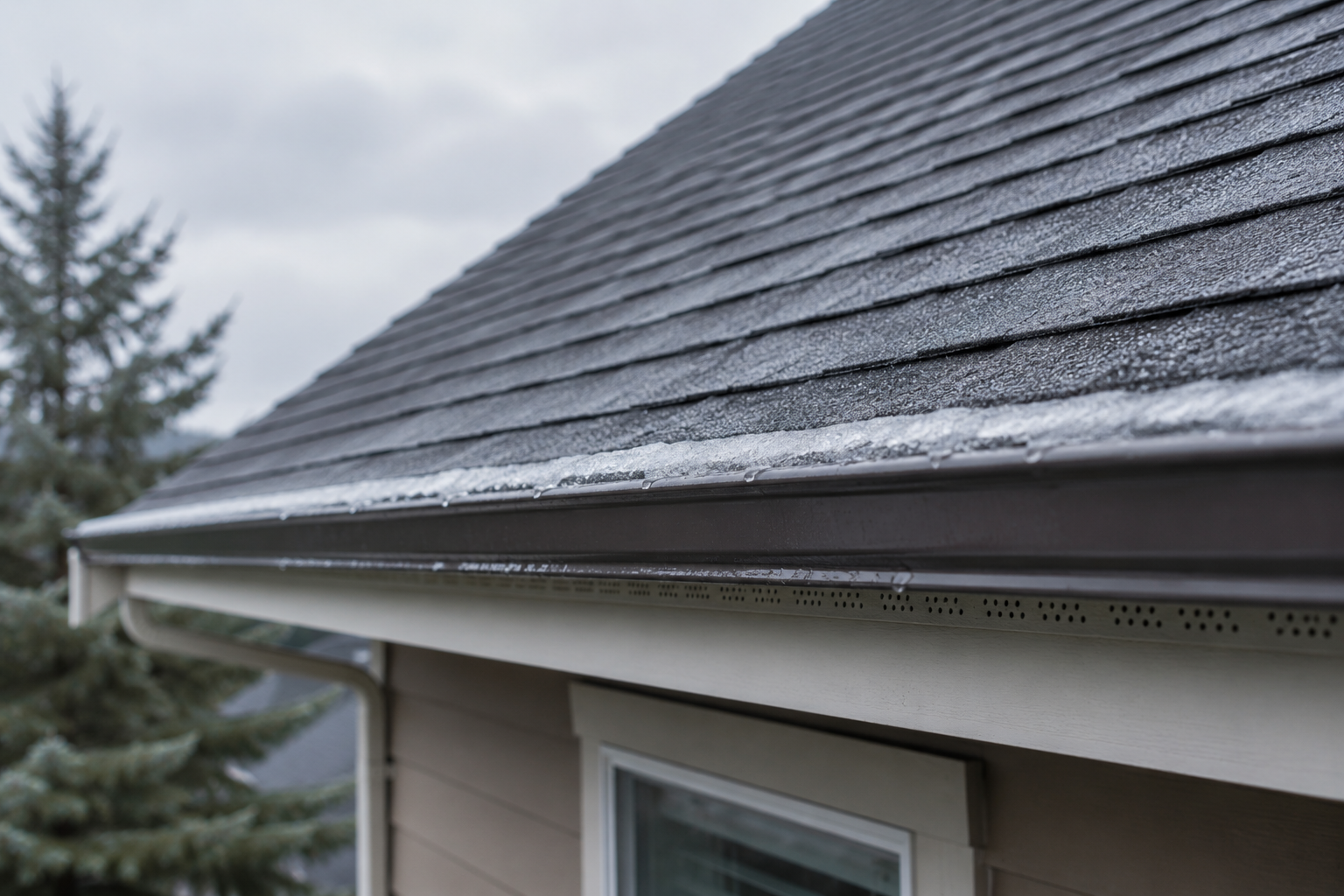
Ice damming gets talked about mostly in the context of colder interior and prairie climates, and a lot of Island homeowners assume it does not apply here. It does, just less frequently and usually tied to specific cold snap events rather than being a constant winter concern. When conditions line up, a hard freeze following a period of snow or heavy rain, ice dams can and do form on Island roofs, and the damage they cause is worth understanding even if it only happens once every few winters.
How an ice dam actually forms
Ice damming starts with heat escaping through the roof deck, from an attic that is warmer than it should be, either due to poor insulation, poor ventilation, or both. That heat warms the underside of the roof near the ridge, melting any snow sitting on top. The meltwater runs down the roof slope until it reaches the eaves, which stay colder because they overhang unheated space below rather than sitting above the warm attic. At the eaves, the meltwater refreezes, and over repeated freeze-thaw cycles, a ridge of ice builds up right at the roof edge.
Once that ice ridge forms, it creates a dam exactly where the name suggests, and subsequent meltwater from further up the roof has nowhere to go but to pool behind the ice and work its way under the shingles, since shingles are designed to shed water running downhill, not water pooling and pushing upward against the underside of the shingle courses.
Why the Island sees a milder but real version of this problem
Most winters here do not sustain the kind of prolonged deep freeze that causes severe ice damming in colder climates. What the Island does see periodically is a cold snap, sometimes with snow, followed by a freeze-thaw cycle over a few days, which is enough to form a smaller scale ice dam, particularly on north-facing slopes, roofs with less attic insulation than they should have, or roofs that already have ventilation issues pushing more heat into the attic than intended. It does not need to happen every winter to cause real damage when it does.
The damage ice damming actually causes
Water backing up behind an ice dam finds any available gap in the shingle overlap and works underneath, soaking the underlayment and deck below. If ice and water shield membrane was installed at the eaves during the last reroof, this is exactly the scenario it is designed to handle, and the deck stays protected even with some water backup. Without that membrane, water intrusion at the eaves can lead to interior ceiling staining, damaged insulation, and in repeated or severe cases, rot in the roof deck and fascia over time.
Eave protection: the specific fix
Ice and water shield is a self-adhering waterproof membrane installed directly on the deck at the eaves, typically extending a set distance up from the edge, often specified based on local building code and roof pitch, sufficient to cover the zone where ice damming meltwater backup is most likely to occur. Unlike standard underlayment, this membrane seals around nail penetrations and provides a genuinely watertight barrier rather than just a water-resistant one, which is exactly what is needed in a spot where standing water, not just flowing water, can occur.
This membrane is standard practice on quality reroofs today, and its absence on an older roof is one of the more common gaps we find during inspections, particularly on roofs installed before eave membrane became a more consistently followed specification in the industry.
Attic ventilation and insulation: addressing the root cause
Eave membrane protects against the water intrusion an ice dam causes, but it does not stop the ice dam from forming in the first place. That requires addressing the actual heat loss into the attic, proper insulation to keep living space heat where it belongs, and proper ventilation to keep the attic itself close to outdoor temperature so snow does not melt unevenly across the roof in the first place. A cold, well-ventilated attic sees far less ice damming than a warm, poorly ventilated one, even under identical outdoor weather conditions.
Downspout and drainage considerations during a freeze
Ice damming issues can compound if downspouts themselves are frozen or blocked, since meltwater that does make it past the eaves still needs somewhere to go. A downspout with standing water that freezes solid can back up the entire gutter system during a subsequent thaw, adding to the volume of water looking for somewhere to escape at the roofline. Keeping gutters and downspouts clear heading into the colder months, covered in more detail in our gutter maintenance article, is a simple step that reduces one more variable in the ice damming equation.
How roof design and complexity affect risk
Roofs with a lot of valleys, dormers, or complex intersecting rooflines tend to see more localized ice damming than a simple, straightforward gable roof, since these areas naturally collect more snow and meltwater in concentrated spots. A valley in particular can act as a channel funneling meltwater from a large roof area into a relatively narrow path, which is exactly the kind of spot where eave and valley membrane matters most, and where a simpler roof shape would see comparatively less concentrated water flow.
What homeowners can do during an active cold snap
- Check for ice buildup at the eaves after a hard freeze following snow or heavy rain
- Avoid chipping at ice dams directly, which risks damaging shingles underneath
- A roof rake used carefully from the ground to remove excess snow load can reduce meltwater volume before it becomes an issue
- Note any interior staining that appears during or shortly after a cold snap, since this often points to eave water intrusion
When to have eave protection added
If your roof does not currently have ice and water shield membrane at the eaves, it can sometimes be added as a standalone project on an existing roof, though this depends on the roof’s condition and is generally more involved than adding it during a full reroof, where the shingles are already coming off anyway. For a roof due for replacement in the coming years, confirming eave protection will be included as standard practice is worth doing explicitly rather than assuming it will happen automatically.
Frequently asked questions
Does every Island roof need ice and water shield at the eaves?
It is considered standard best practice on modern reroofs regardless of how often ice damming actually occurs locally, since the cost during a reroof is modest compared to the water damage it prevents on the occasions when a cold snap does line up with the right conditions.
How do I know if my attic ventilation is contributing to ice dam risk?
Uneven snow melt on the roof, clear patches near the ridge with snow still present near the eaves, is a visible sign of heat escaping unevenly through the attic. A professional inspection can confirm whether ventilation or insulation improvements would help.
Is it safe to remove an ice dam myself?
Chipping or hammering at ice on a roof risks damaging shingles and is also a fall hazard on a slick surface. A roof rake from the ground to reduce snow load is a safer approach, and a professional should handle direct ice dam removal if it becomes necessary.
Will homeowner insurance cover ice dam damage?
Many policies do cover resulting water damage, though this varies by policy and by whether the damage is attributed to a maintenance issue like inadequate ventilation versus a genuinely unusual weather event. Reviewing your specific policy is worthwhile if you have experienced this kind of damage.
Does roof shape make a real difference in ice dam risk?
Yes, roofs with valleys, dormers, or more complex intersecting shapes tend to concentrate meltwater in specific spots more than a simple gable roof, making those areas more prone to localized ice damming even on an otherwise well-ventilated roof.
Can gutter problems make ice damming worse?
Yes, blocked or frozen downspouts can back water up through the whole gutter system during a thaw, adding to what is already trying to drain at the roofline during an ice dam event. Keeping gutters clear heading into winter is a simple preventive step.
If you have noticed ice buildup at your eaves during a cold snap, or want to confirm your roof has proper eave protection before the next one hits, The Roof Pro can take a look and give you a straight answer.