

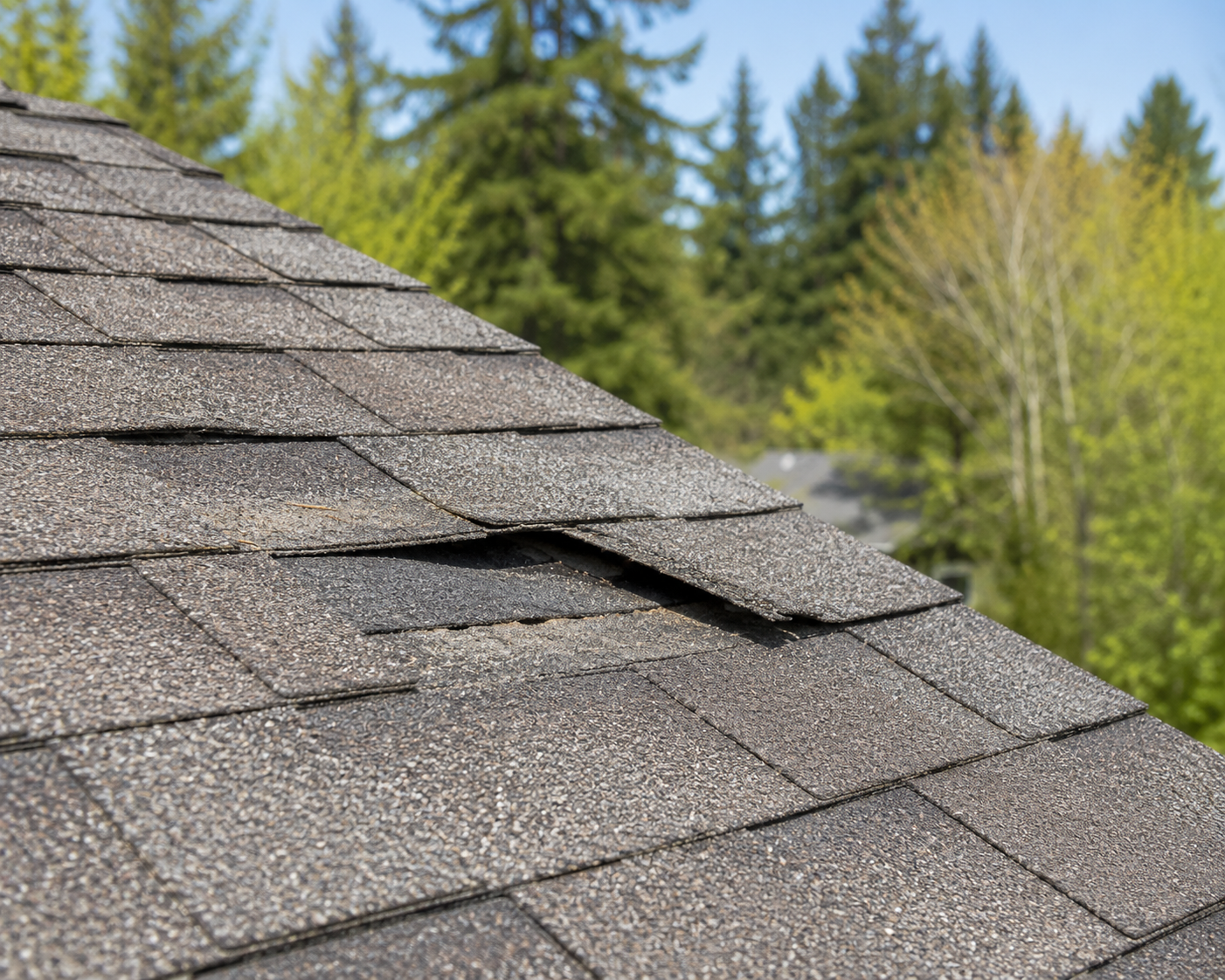
Almost no roof fails all at once. It fails in stages, and the first stage is always cheap to fix. A couple of lifted shingles. A bit of cracked sealant. A patch of moss that has started to creep under an edge. None of it feels urgent. None of it is leaking yet. So it waits.
That waiting is the most expensive decision most homeowners never realize they are making.
On Vancouver Island, spring is the moment those small problems become visible and the last quiet stretch before the weather comes back hard. The repair that costs a few hundred dollars in May is the same repair that costs many times more once water has been let into the structure. This is the math of putting it off, and it is worth understanding before the next wet season makes the decision for you.
How a Small Problem Becomes a Big One
The reason roof repairs escalate so dramatically is that the roof is a system, and damage moves through it in a predictable order. Once you see the chain, the urgency makes sense.
It usually goes like this. A small surface issue, say a few lifted shingles or failed flashing, lets a little water past the outer layer. That water reaches the underlayment and then the roof deck, the wooden surface underneath. Wet wood does not dry well in a coastal climate, so it stays damp. Damp wood rots. Rot spreads to the framing. Moisture works into the insulation, which loses its effectiveness and starts holding water against the ceiling. Eventually it reaches the drywall, and that is the brown stain you finally notice.
By the time you see the stain, the problem is no longer a roofing problem. It is a roofing, framing, insulation, and interior-finish problem all at once. Each link in that chain costs more than the one before it.
Water damage rarely stays small for long. That is not a slogan. It is just how the system behaves.
The Actual Cost Difference
Numbers make this concrete. Exact figures vary with the roof and the extent of the damage, but the pattern holds everywhere: catching a problem early is a fraction of the cost of letting it run.
Insert comparison table or infographic here showing the cost difference between early repairs and major water damage restoration.
The header on the first row tells the whole story. The same underlying issue can be a quick service call or a multi-trade renovation, and the only variable that changed was time.
Why the Quick Patch Usually Costs More
A lot of homeowners reach for roof repair tape, a tube of sealant, or a tub of tar, and there is a place for those things in a genuine emergency, like stopping water on a stormy night until a roofer can come. As a permanent fix, they tend to fail in the worst possible way.
The danger is not that the patch does nothing. It is that it does just enough. A tar smear or a strip of tape can stop the visible drip while water keeps finding its way in around the edges. You think the problem is solved. Meanwhile the deck underneath is quietly rotting, hidden by the very patch that made you stop worrying. Months later you are dealing with the original leak plus everything that decayed while it was masked.
A proper repair addresses the actual entry point and the layers beneath it. That is the difference between paying once and paying twice.
Why Spring Is the Moment, Specifically
Timing is the part of this that is unique to where you live. On Vancouver Island, the wet season does the damage, and spring is when the damage shows itself.
Months of rain have already worked at every weak point on the roof. As the weather dries out, those problems become both visible and accessible. A roofer can actually get up there safely, see clearly, and fix things before the next round of storms tests the repair. Wait, and you are heading into late summer and fall, when storm season returns, roofing companies are buried in emergency calls, and a small problem you could have booked at your leisure becomes one you are scrambling to fix in the rain.
Spring repairs are calm. Storm-season repairs are not. The work is the same. The stress and the queue are not.
The Small Signs Worth Acting On Now
None of these will feel like an emergency. That is exactly why they are worth catching.
- A few shingles that are lifted, curled, cracked, or missing.
• Granules from asphalt shingles collecting in the gutters.
• Moss or dark organic growth spreading across the roof surface.
• Cracked or missing sealant around flashing, vents, or skylights.
• Minor staining on a ceiling or in the attic that has not spread yet.
• Sagging or pooling at the gutters, a sign water is not draining properly.
Any one of these is a low-cost fix today. The whole point of acting now is that none of them have to become the expensive version.
A Note for the Homeowner Thinking Long Term
People often search whether roof repairs are tax deductible. For a primary residence, routine repairs generally are not deductible, though the rules differ for rental or income properties, and that is a question for an accountant rather than a roofer. The more useful financial frame for most homeowners is simpler: a maintained roof protects the single largest asset most people own.
Deferred roof maintenance does not just cost more to fix later. It quietly erodes the value of the house, shows up on inspection reports when you sell, and shortens the life of the entire roof. Spending a little to keep a roof sound is one of the better-returning things you can do for a home on this coast.
Common Questions
How Much Does a Small Roof Repair Cost?
A minor repair, like replacing a few shingles or resealing flashing, is one of the more affordable calls a homeowner makes. The exact figure depends on access and the extent of the work, but it sits far below the cost of repairing the water damage that follows a leak left alone.
Is It Worth Fixing a Small Roof Problem Right Away?
Almost always, yes. The cost of a minor repair is a fraction of what the same issue becomes once water reaches the deck and framing. Early action is the cheapest insurance there is on a roof.
Can I Just Patch It Myself with Roof Tape or Tar?
For an emergency, to stop water temporarily, those products have a use. As a lasting fix they tend to mask the problem rather than solve it, which often makes the eventual repair larger. A proper repair deals with the actual entry point and what lies beneath it.
How Do I Know If My Roof Needs Repair?
Look for lifted or missing shingles, granules in the gutters, spreading moss, cracked sealant around flashing, or early ceiling staining. If you spot any of these, a quick inspection tells you whether it is a small fix or something more.
Why Should I Do This in Spring Rather Than Later?
Spring is when winter damage is visible and the roof is dry enough to work on safely, ahead of storm season. Waiting means competing for a roofer’s time during the busiest, wettest part of the year, often with a bigger problem than you started with.
Fix It While It Is Still Small
The most expensive roof repair on Vancouver Island is the one that was cheap last spring and got ignored. Nothing about a small problem announces itself as urgent, which is precisely why the small problems are the ones that grow into the big bills.
If you have noticed lifted shingles, spreading moss, a bit of staining, or anything that does not look quite right up there, The Roof Pro can take a look while it is still a minor repair. We provide roof inspections and repairs across Nanaimo and Central Vancouver Island. Book an assessment at theroofpro.ca and deal with the small version now, before the wet season turns it into the large one.