

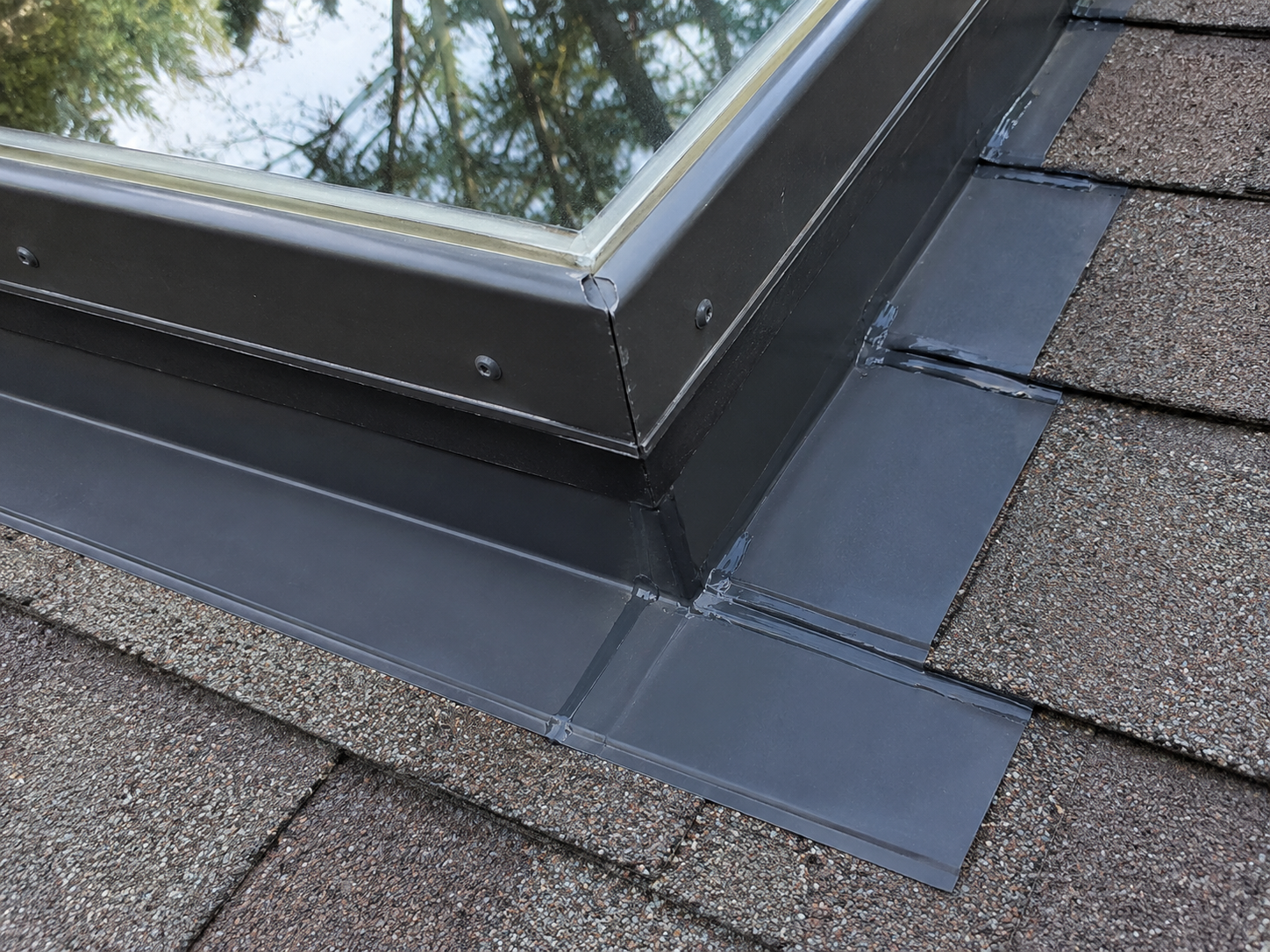
When a roof leaks, the instinct is to assume the shingles failed somewhere in the open field, which is the big flat expanse of roof most people picture when they think of a reroof. In practice, the open field is rarely where leaks start. Almost every penetration through the roof deck, including skylights, plumbing vents, chimneys, and exhaust fans, is a seam, and seams are where water finds a way in. Understanding which penetrations are the highest risk, and why, helps homeowners know what to actually check first when something goes wrong.
Why penetrations are different from the rest of the roof
Shingles work as a water-shedding system, each course overlapping the one below so water runs down and off without pooling. Every place something interrupts that pattern, such as a skylight frame, a vent pipe, or a chimney base, breaks the natural shingle overlap and requires a separate waterproofing detail called flashing to redirect water around the object instead of into it. Flashing is metal, rubber, or a combination of both, custom fit to the specific penetration. It works well when installed correctly but ages, shrinks, or corrodes at a different rate than the shingles around it, which is exactly why penetrations fail years before the surrounding shingle field does.
Skylights: the most common problem penetration
Skylights combine several separate risk factors in one spot. They interrupt the roof deck with a large rectangular opening, which needs flashing on all four sides. They often sit in a location that collects debris and standing water if the surrounding curb or step flashing is even slightly undersized. Furthermore, older skylight units can develop condensation issues that mimic a leak without an actual water intrusion point, which sometimes leads homeowners to blame the roof for a problem the skylight unit itself is causing.
Skylight flashing typically uses a stepped flashing system along the sides combined with a continuous head flashing above and a sill flashing below. When any section of that system is improperly lapped, under-sized, or has failed sealant at a seam, water tracks along the underside of the shingles and can travel a surprising distance from the actual entry point before showing up as a stain on your ceiling. This is part of why a skylight leak can be tricky to diagnose without someone experienced looking at the actual flashing detail.
Plumbing vent boots: small, rubber, and easy to overlook
Every home has one or more plumbing vent stacks poking through the roof, and each one uses a rubber or neoprene boot that seals around the pipe. These boots are a wear item, full stop. UV exposure and temperature cycling degrade rubber over years, and a cracked or split boot is one of the more common sources of a slow, gradual leak that goes unnoticed because the water intrusion is small and intermittent rather than an obvious active drip. Vent boots are also inexpensive and quick to replace, which makes checking them during any roof inspection worthwhile even if nothing seems wrong yet.
Chimney flashing: where age and movement combine
Chimneys present a unique challenge because masonry and roof framing move differently as temperatures change, expanding and contracting at different rates. Chimney flashing needs to accommodate that movement while still shedding water, typically through a combination of step flashing along the sides and a counter-flashing embedded into the mortar joints above. Older mortar can crack or loosen its grip on the counter-flashing over time, and once that seal fails, water works its way behind the flashing and down into the wall or ceiling below, often well before any visible sign appears from inside the house.
Exhaust vents and other roof-mounted fixtures
Bathroom and kitchen exhaust fans, powered attic ventilators, and any other fixture mounted through the roof deck all carry the same underlying risk: a metal or rubber flashing detail aging differently than the surrounding shingles. These tend to get less attention than skylights or chimneys simply because they are smaller and less visually prominent, but they follow the same failure pattern and are worth including in any thorough roof inspection.
Why penetration leaks are harder to diagnose than field leaks
A leak from a straightforward shingle failure in the open field usually shows up close to where the water actually entered. A leak that starts at a penetration can travel along the underside of the underlayment or deck for a meaningful distance before it finds a gap to drip through into the living space, following the path of least resistance rather than a straight line down. This is why a water stain on a bedroom ceiling does not necessarily mean the leak originates directly above it, and why tracking down a penetration leak sometimes takes a careful inspection from both the roof surface and the attic side to find where water is actually tracking.
Sealant is a maintenance item, not a permanent fix
A lot of penetration leaks get patched with a bead of roofing sealant applied over a visible gap. While this can work as a short-term stop-gap, sealant is not a permanent flashing repair. Sealant degrades with UV exposure and temperature cycling faster than the metal or rubber flashing it is applied over, which means a sealant-only fix from a few years ago is often the reason a leak reappears in roughly the same spot. Proper flashing repair addresses the underlying metal or rubber component, with sealant used as a finishing detail rather than the entire repair.
This distinction matters when getting a repair quote. A quick, cheap fix that is really just fresh sealant over an old problem will likely need repeating within a couple of years, while a proper flashing repair or replacement costs more upfront but actually resolves the underlying issue.
How penetration count relates to overall leak risk
A roof with a single plumbing vent and no skylights carries meaningfully less inherent leak risk than one with two skylights, a chimney, multiple exhaust vents, and a powered attic ventilator, simply because each additional penetration is another flashing detail that can eventually fail. This is not a reason to avoid skylights or additional ventilation, as both have real value, but it is a reason homes with more roof penetrations benefit from more frequent inspection intervals than a simpler roof with fewer interruptions in the shingle field.
Skylight age and when replacement makes more sense than repair
Skylight units themselves, meaning the glass or acrylic dome and its frame, have a service life separate from their flashing, typically somewhere in the range of ten to twenty years depending on quality and exposure. An aging skylight that has developed seal failure between glass panes, visible fogging, or a frame that has warped slightly is often a better candidate for full replacement than a repeated cycle of flashing repairs around a unit that is failing on its own terms. Replacing an old skylight during a reroof, rather than working around it, is also generally more cost-effective than doing it as a standalone project later, since the surrounding shingles are already being disturbed regardless.
What a proactive inspection actually checks
- Skylight flashing for lifted, cracked, or missing sealant at seams
- Vent pipe boots for cracking, splitting, or UV degradation
- Chimney counter-flashing and surrounding mortar for gaps or looseness
- Any exhaust vent or roof-mounted fixture for corrosion or lifted flashing edges
- Attic side inspection near penetrations for staining, even without a visible interior leak yet
Frequently asked questions
How often should skylight and vent flashing be checked?
An annual visual check, ideally as part of a routine roof inspection, catches most developing issues before they become active leaks. Properties with a lot of tree cover or heavy debris buildup around penetrations benefit from checking more often.
Can a vent boot be replaced without redoing the whole roof?
Yes, in most cases a vent boot replacement is a standalone repair that does not require touching the surrounding shingles, provided the shingles themselves are still in good condition.
Why does my skylight fog up or show moisture without an actual leak?
Condensation between skylight glass panes, particularly on older units with degraded seals, can look similar to a leak but is a separate issue related to the window unit itself rather than the roof flashing around it. Distinguishing between the two is worth having assessed directly.
Is chimney flashing something that needs to be replaced during a reroof?
It is common practice to replace or at minimum inspect chimney flashing during a full reroof, since reusing old flashing on new shingles can mean a mismatch in age and condition that leads to an earlier repeat leak.
Is it normal for a roof with several skylights to need more frequent inspection?
Yes, more penetrations mean more flashing details that can eventually wear out, so a roof with multiple skylights or several roof-mounted fixtures reasonably benefits from checking those spots a bit more often than a simpler roof would need.
Can I apply roofing sealant myself as a temporary fix?
For a very minor, clearly identified gap, it can buy some time, but it should be treated as temporary. A proper assessment of the underlying flashing is worth getting before assuming a sealant patch has actually solved the problem.
If you have noticed a water stain and are not sure where it is actually coming from, The Roof Pro can inspect the roof and attic together to track down the real source before recommending a fix.