

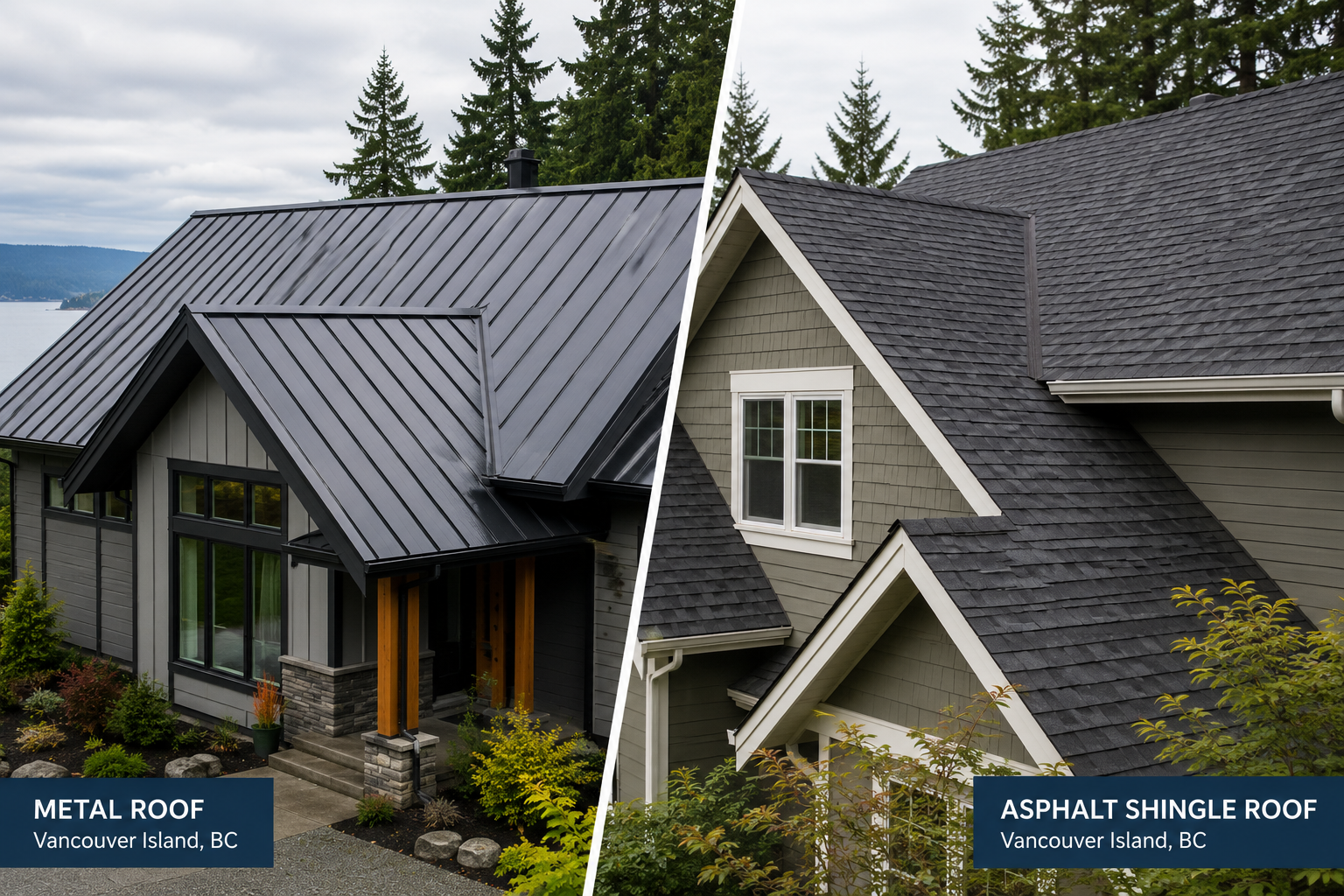
When it is time for a new roof, the first real decision most Island homeowners face is the material. On Vancouver Island, the conversation almost always comes down to two options: asphalt shingles or metal roofing. Both are common here, both work, and both have a genuine case to make. The right choice depends on your budget, how long you plan to stay in the home, and how much you care about never thinking about your roof again.
This is a straight comparison, with the local climate factored in, so you can weigh them properly rather than guessing. There is no single winner. There is a winner for your situation, and that is the one worth finding.
The quick version
If you want the short answer before the details: asphalt shingles cost less up front and are perfectly good when maintained, while metal costs more at the start but lasts far longer and handles our wet, mossy climate with much less fuss. Asphalt wins on initial price. Metal wins on lifespan and low maintenance. Everything below is about which of those matters more to you.
Up-front cost
There is no way around it: asphalt shingles are the more affordable option to install. For homeowners working to a budget, or for those who do not plan to stay in the home for decades, that lower starting cost is a real and reasonable advantage. It is the main reason asphalt remains the most common roofing material on the Island.
Metal roofing costs noticeably more to install. The material itself is pricier, and it generally takes more skill and time to install correctly, which is reflected in the labour. If you are comparing two quotes side by side on price alone, asphalt will almost always come out lower. The question is whether price alone is the right way to compare them, and for most people it is not.
Lifespan: where the comparison changes
This is where metal pulls ahead, and it is not close. A quality metal roof can comfortably last several decades, often outliving two or even three asphalt roofs installed over the same period. For many homeowners, a metal roof is genuinely the last roof they will ever buy for that house.
Asphalt shingles have a shorter working life, and on the Island that life tends toward the lower end of the rated range because of our damp, mossy conditions. Well maintained, an asphalt roof gives solid service. But it will need replacing while a metal roof installed at the same time is still going strong. (You can read more about this pattern in our breakdown of how Vancouver Island’s coastal climate affects roof lifespan).
This is why the up-front price gap narrows when you look at the full picture. Paying less twice can end up costing more than paying more once. If you plan to stay in your home for the long haul, the lifetime math often favours metal even though the sticker price does not.
How each one handles the Island climate
This is the part a generic comparison would miss, and it matters here more than almost anywhere. Our coastal climate is hard on roofs, and the two materials respond to it very differently.
Moss and moisture
Moss is the Island’s signature roof problem, and metal has a clear edge. Its smooth, hard surface gives moss very little to grab onto, and it sheds water quickly so the surface dries faster. Asphalt shingles, with their textured granular surface and the gaps between them, are far friendlier to moss, especially on shaded north-facing slopes. An asphalt roof here needs ongoing moss management. A metal roof needs much less.
Rain and wind
Both materials handle Island rain well when installed properly, but metal sheds water exceptionally fast, which is a real benefit in a climate where the roof is wet so often. In high wind, a properly installed metal roof is very secure, while asphalt shingles can lift at the edges over time, particularly once they have aged. Quality installation matters enormously for both, but metal’s continuous panels give it an advantage in the worst storms.
Salt air
Here is the one area where metal needs a caveat. Salt air is corrosive, and homes very close to the ocean need metal roofing with proper coatings rated for coastal conditions, plus attention to the fasteners and edges over time. This is not a reason to avoid metal near the water, but it is a reason to make sure it is specified correctly. Asphalt is not corroded by salt the way metal can be, though its own metal flashing still is.
Maintenance and hassle
If you would rather not think about your roof, metal is the lower-maintenance choice. It resists moss, sheds debris well, and generally asks little of you between inspections. Asphalt is not high-maintenance exactly, but in this climate it does require regular moss control and gutter care to reach its full lifespan. Neglect an asphalt roof here and it will let you know, sooner than you would like.
Appearance
Both materials come in a wide range of colours and profiles, so either can look great on an Island home. Asphalt offers a traditional, familiar look that suits most neighbourhoods. Metal has a clean, modern profile that many West Coast homeowners love, and it is available in styles that mimic traditional materials if you prefer a softer look. This one comes down to personal taste more than performance.
Noise, a common question
People often worry that a metal roof will be loud in the rain, which on the Island is a fair thing to ask about. In practice, a properly installed metal roof over solid sheathing and insulation is much quieter than the old barn-roof reputation suggests. Most homeowners are surprised by how little difference they notice once they are living under it.
So which should you choose?
Here is the honest framing. Neither material is the right answer for everyone.
- Choose asphalt shingles if up-front cost is your main concern, if you are not planning to stay in the home for decades, or if you are comfortable keeping up with regular moss and gutter maintenance.
- Choose metal roofing if you want the longest possible lifespan, the least ongoing maintenance, and the best resistance to moss, and if the higher initial cost fits your budget or your long-term plan for the home.
For many Island homeowners staying put long term, metal’s longer life and easier upkeep make it the better lifetime value even at the higher price. For others, asphalt is the sensible, proven choice that does the job at a price that works today. Both are legitimate. The wrong move is choosing on price alone without thinking about how long you will own the home.
Frequently asked questions
Is a metal roof worth the extra cost on Vancouver Island?
For homeowners staying long term, often yes. The much longer lifespan and lower maintenance, plus strong moss resistance in our climate, can make metal the better lifetime value despite the higher up-front price. For shorter ownership horizons, asphalt’s lower cost may make more sense.
Which roof resists moss better?
Metal, clearly. Its smooth surface and fast drainage give moss little to hold onto, while asphalt’s textured surface is more prone to moss growth on shaded slopes and needs regular treatment here.
Are metal roofs noisy in the rain?
Not really, when installed properly. Over solid sheathing and insulation, a modern metal roof is far quieter than people expect, and most homeowners barely notice the difference.
Does salt air damage metal roofs near the ocean?
It can, which is why coastal homes need metal roofing with coatings rated for marine conditions and attention to fasteners over time. Specified correctly, metal performs very well near the water.
The bottom line
Asphalt and metal are both solid choices on Vancouver Island. Asphalt saves you money up front and serves well with regular care. Metal costs more at the start but rewards you with decades of low-maintenance, moss-resistant service. The best choice is the one that fits your budget and how long you plan to stay.
If you would like help weighing the two for your specific home, the team at The Roof Pro can walk you through both options, give you real numbers, and recommend what makes sense for your roof and your plans. You can easily schedule an evaluation through our roof inspection page or jump right into planning by visiting our request a quote page whenever you are ready to talk it through.