

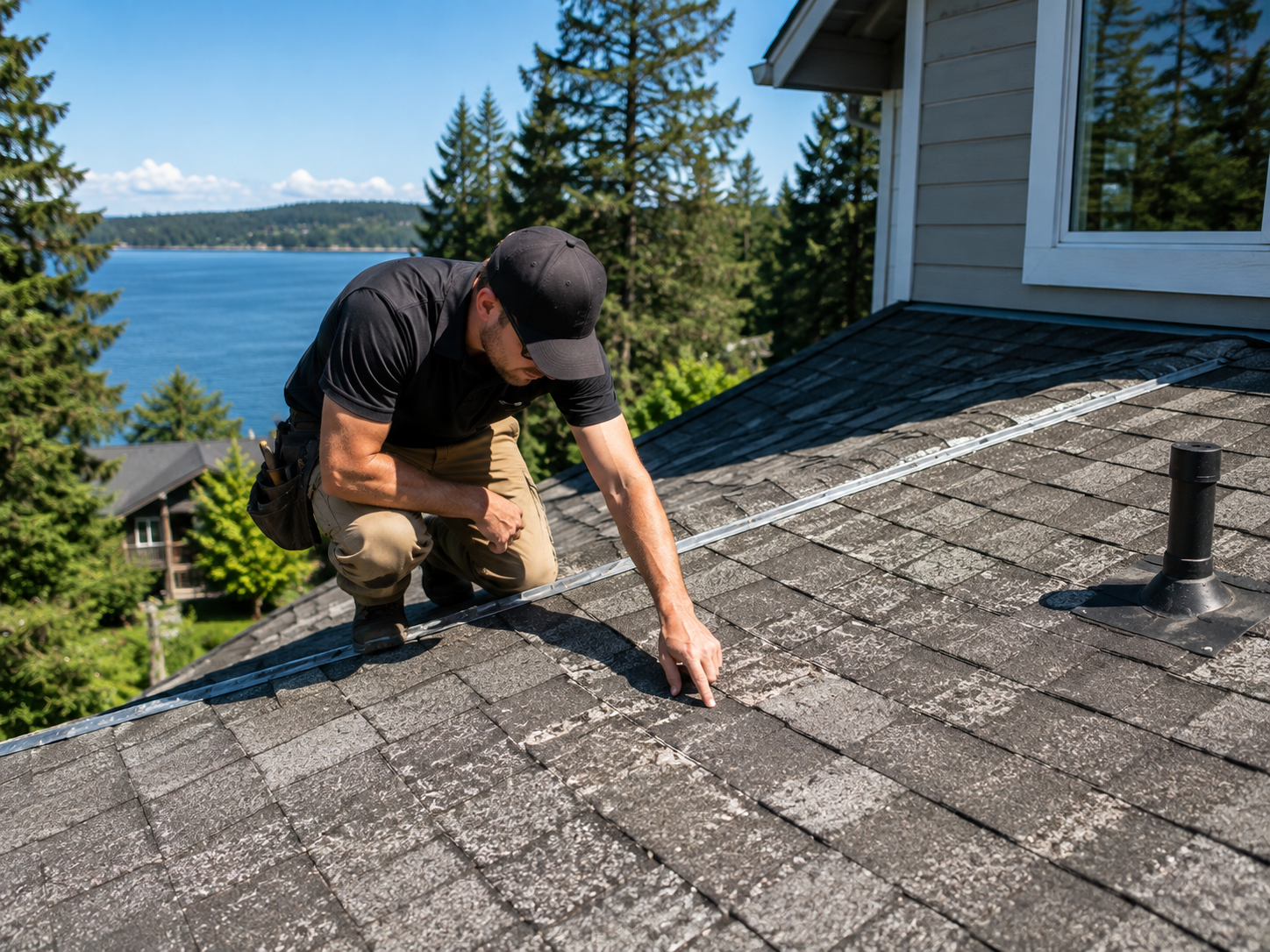
Have you ever looked at your roof on a bright summer afternoon and assumed everything was fine simply because there weren’t any leaks?
You’re not alone. Many homeowners associate roof damage with heavy rain, windstorms, or winter weather. However, some of the most significant wear on a roofing system happens quietly during the warmest months of the year. While Vancouver Island enjoys beautiful summers, the combination of heat, ultraviolet (UV) radiation, and daily temperature fluctuations can gradually shorten the life of your roof.
Because this damage develops slowly, it often goes unnoticed until autumn rains expose weakened shingles or compromised flashing. That’s why scheduling a summer roof inspection on Vancouver Island is one of the smartest preventive maintenance decisions a homeowner can make.
This guide explains how summer weather affects your roof, the warning signs to watch for, practical maintenance tips, and why an inspection before fall can help protect your home from costly repairs.
Why Summer Weather Is Harder on Your Roof Than Many Homeowners Realize
Your roof is exposed to sunlight every day. Even during moderate Vancouver Island summers, roofing materials absorb solar energy for hours at a time.
Over months and years, repeated exposure to sunlight and heat can gradually affect roofing materials by:
- Drying out protective compounds
- Accelerating natural aging
- Causing expansion and contraction
- Reducing flexibility
- Increasing the likelihood of weather-related wear
Unlike storm damage, UV damage happens slowly, making it easy to overlook until visible deterioration appears.
How UV Rays Affect Asphalt Shingles
Ultraviolet radiation is invisible, but its effects on roofing materials are very real.
Asphalt shingles contain asphalt, fiberglass reinforcement, and protective mineral granules. Over time, prolonged UV exposure naturally contributes to the aging process of these materials.
Common Effects of UV Exposure
- Shingles become less flexible
- Protective oils gradually diminish
- Surface granules begin wearing away
- Colors may fade
- Cracks become more likely as materials age
These changes typically occur gradually over many years, depending on factors such as installation quality, roof orientation, ventilation, maintenance, and overall environmental conditions.
The Impact of Summer Heat
Heat doesn’t simply warm your roof—it also causes roofing materials to expand.
As temperatures cool overnight, those same materials contract.
This daily cycle repeats hundreds of times throughout the summer.
Thermal Expansion and Contraction
Every roofing material expands slightly when heated and contracts as temperatures fall.
Although this movement is normal, repeated thermal cycling can gradually contribute to wear around:
- Flashing
- Sealants
- Roofing fasteners
- Vents
- Chimneys
- Skylights
Regular inspections help identify these areas before moisture finds a way inside.
Why South-Facing Roof Slopes Often Age Faster
Many homes receive more direct sunlight on south- and southwest-facing roof sections.
These slopes may experience:
- More hours of direct sun
- Greater UV exposure
- Higher surface temperatures
- Faster fading
- Earlier signs of wear compared with shaded roof areas
This doesn’t necessarily mean problems are present, but it does make periodic inspections worthwhile.
Common Signs of Summer Roof Damage
Summer-related wear isn’t always obvious from the ground, but homeowners can watch for several warning signs.
Curling or Lifting Shingles
As roofing materials age, some shingles may begin curling at the edges or lifting slightly.
This can reduce their ability to shed water effectively.
Cracked Shingles
Repeated expansion and contraction may contribute to cracking over time.
Cracks can allow water to penetrate once fall and winter storms arrive.
Granules in the Gutters
If you notice an increasing amount of granules inside your gutters, it may indicate normal aging or accelerated wear.
Granules protect shingles from UV exposure and weathering.
Discoloration
Uneven fading doesn’t always indicate a serious problem, but significant discoloration can suggest prolonged exposure or aging.
Loose Flashing
Heat movement may gradually affect flashing around roof penetrations.
Professional inspections can identify loose or deteriorating flashing before leaks develop.
Why Small Problems Become Big Repairs
One of the biggest misconceptions homeowners have is believing a roof is healthy simply because it isn’t leaking.
In reality, roofing systems often deteriorate long before water reaches your ceiling.
For example:
- A small crack may eventually allow moisture beneath the shingles.
- Loose flashing may permit water intrusion during wind-driven rain.
- Worn sealants may fail after repeated heating and cooling cycles.
Addressing these issues early is generally simpler than repairing water damage inside the home.
Benefits of a Summer Roof Inspection
Scheduling a summer roof inspection on Vancouver Island offers several advantages.
Early Problem Detection
Roofing professionals can identify developing issues before they become emergencies.
Easier Repairs
Dry summer weather generally provides more predictable conditions for maintenance or repairs.
Better Planning
If a roof replacement is eventually needed, inspecting during summer allows homeowners more time to plan before the rainy season.
Peace of Mind
Knowing your roof has been evaluated by a professional helps reduce uncertainty heading into fall and winter.
Common Mistakes Homeowners Make
Avoiding these common mistakes can help extend the life of your roofing system.
Waiting Until a Leak Appears
Leaks often indicate that water has already bypassed one or more layers of the roofing system.
Preventive inspections are usually more effective than reactive repairs.
Ignoring Minor Damage
A single damaged shingle or loose flashing may seem insignificant, but small issues can become more serious over time.
Walking on the Roof
Many roofing materials can be damaged by improper foot traffic.
Unless it is safe and necessary, visual inspections should be performed from the ground or by a qualified roofing professional.
Skipping Routine Maintenance
Regular maintenance helps identify wear before it develops into larger problems.
Summer Roof Maintenance Tips
Homeowners can perform several simple maintenance tasks throughout the summer.
Summer Roof Care Checklist
✅ Inspect the roof from the ground using binoculars if necessary.
✅ Clean gutters and downspouts.
✅ Remove branches resting on the roof.
✅ Trim overhanging trees.
✅ Check ceilings for new water stains.
✅ Inspect the attic for signs of moisture or daylight.
✅ Schedule a professional roof inspection if your roof is aging or has experienced previous repairs.
These simple steps help maintain your roofing system and improve overall home protection.
Frequently Overlooked Roofing Components
Many homeowners focus only on shingles.
A complete roofing system also includes:
- Flashing
- Ridge vents
- Roof vents
- Chimney flashing
- Skylights
- Valleys
- Underlayment
- Soffits
- Fascia
- Gutters
Each component plays an important role in directing water away from your home.
A professional inspection evaluates the roofing system as a whole—not just the visible shingles.
Cost Considerations
The cost of repairing or replacing a roof depends on several variables.
These may include:
- Roof size
- Roof pitch
- Material type
- Accessibility
- Existing roof condition
- Extent of repairs
- Flashing condition
- Ventilation improvements
Because every home is different, a professional inspection provides the best basis for understanding what work, if any, may be required.
Professional Recommendations
If your roof is more than several years old or has experienced previous repairs, consider making roof inspections part of your annual home maintenance routine.
Professional roofing contractors recommend paying particular attention to:
- Areas around chimneys and vents
- Roof valleys where water collects
- Signs of aging shingles
- Gutters that accumulate granules
- Attic ventilation
- Moss or organic growth
A proactive approach helps homeowners address maintenance concerns before they develop into larger repair projects.
Summer vs. Fall Roof Inspections
| Summer Inspection | Waiting Until Fall |
| Easier to identify sun-related wear | Damage may already allow water intrusion |
| More predictable weather for repairs | Rain may delay roofing work |
| More scheduling flexibility | Peak roofing season may reduce availability |
| Allows time to plan replacement if needed | Emergency repairs may become necessary |
| Helps prepare for rainy season | Increased risk of discovering problems during storms |
For many homeowners, summer provides an excellent opportunity to assess the roof before seasonal weather changes.
Why Choose The RoofPro
Your roof protects one of your biggest investments, and choosing the right contractor is an important part of maintaining it.
At The RoofPro, homeowners receive honest, practical recommendations based on the actual condition of their roofing system. With experience working in Vancouver Island’s unique coastal climate, the team understands how seasonal weather, UV exposure, and moisture affect residential roofs throughout the year.
Homeowners choose The RoofPro because they value:
- Local experience serving Vancouver Island communities
- Professional roof inspections
- Quality workmanship
- Honest recommendations without unnecessary pressure
- Clear communication throughout every project
- Safety-focused work practices
- Responsive customer service
Whether your roof needs routine maintenance, repairs, or replacement, a professional assessment helps you make informed decisions with confidence.
Frequently Asked Questions
Does UV damage really shorten the life of shingles?
Over time, prolonged UV exposure contributes to the natural aging process of roofing materials. Combined with heat and weather, it can gradually reduce the flexibility and protective qualities of shingles.
How often should I schedule a roof inspection?
Many homeowners benefit from having their roof professionally inspected periodically, particularly as it ages or after significant weather events. Annual inspections are a common preventive maintenance practice.
Can heat alone damage a roof?
Heat itself is only one factor. Daily expansion and contraction, combined with UV exposure and natural aging, can gradually affect roofing materials over time.
Are darker shingles more affected by summer heat?
Darker roofing materials generally absorb more solar energy than lighter colours, which may result in higher surface temperatures. Overall roof performance also depends on ventilation, insulation, and material design.
Can I inspect my own roof?
You can perform a basic visual inspection from the ground, but walking on a roof can be hazardous and may damage roofing materials. A professional inspection provides a more thorough assessment.
Is summer the best time for roof maintenance?
Summer often provides favourable weather for inspections and maintenance, allowing homeowners to identify potential concerns before the wetter months arrive.
Conclusion
Although Vancouver Island summers are often associated with sunshine and pleasant weather, those same conditions can gradually age your roofing system through prolonged heat and UV exposure. The effects may not be immediately visible, but over time they can contribute to worn shingles, deteriorating flashing, and reduced protection against the elements.
Scheduling a summer roof inspection on Vancouver Island gives you the opportunity to identify developing issues before fall rains arrive. A proactive inspection can help extend the life of your roof, reduce the risk of unexpected repairs, and give you greater confidence heading into the wet season.
If you’re concerned about aging shingles, heat-related wear, or simply want peace of mind, contact The RoofPro to arrange a professional roof inspection. An experienced evaluation today can help protect your home for many seasons to come.